New publication: Use of digital self-control tools in higher education

New publication: Use of digital self-control tools in higher education

Empirical Study, Higher Education, Open access, Publication, Research topic, Self-Regulation, Target group
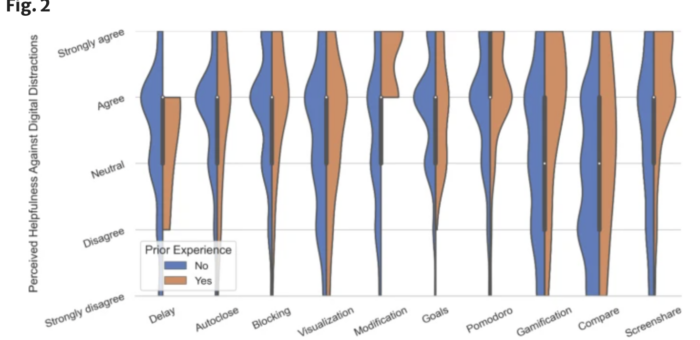
Digital Self-Control Tools in Higher Education: A Dive into Effectiveness and Perception While the accessibility to information and the myriad of online learning resources offer a wealth of benefits, the potential for distraction can hinder academic progress. Addressing this paradox, our educational technologies research group has delved into the realm of digital self-control tools (DSCTs) to better understand their utilization, effectiveness, and perception among higher education students. Our findings have been published in the article "Use of digital self-control tools in higher education – a survey study" in the  journal "Education and Information Technologies". A widespread issue among students today is the struggle between immediate gratification and the pursuit of long-term academic goals. Distractions such as social media browsing and video watching can often compete with essential study time. The…
Read More
Nina Mouhammad @ ECTEL 2023 Doctoral Consortium

Nina Mouhammad @ ECTEL 2023 Doctoral Consortium

Competence development, Conference, Higher Education
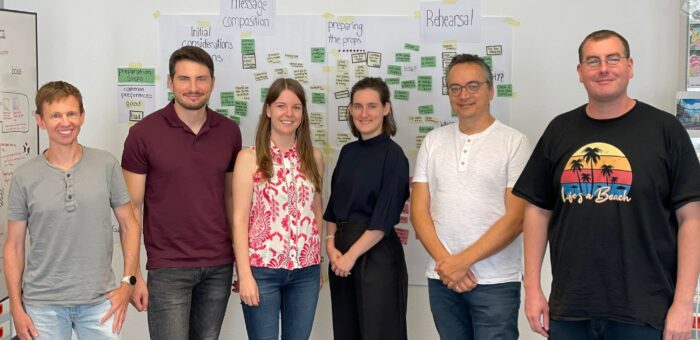
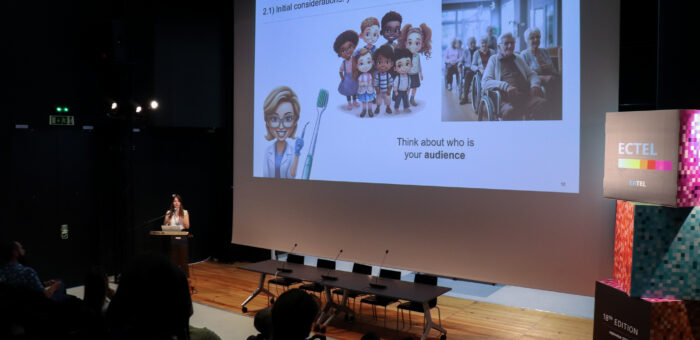
How often in the last few months did you listen to amazing presentations? And how often did you sit through rather boring ones? We have all been there, and it is probably safe to say that we would prefer more of the former and fewer of the latter. The good news is, presentation skills are not traits but skills and can therefore be trained. The challenge, however, is that training these skills requires quite some time and resources, which are often scarce in traditional educational settings. Technology-enhanced learning could fill this gap. And that is where Nina Mouhammad's PhD research, as part of the HyTea-project, is planned to contribute to. In her PhD, she will explore how technology can teach students to create presentation content that makes their presentations truly…
Read More
Exploring the Future of Chatbots in Education: Insights from DeGEval 2023

Exploring the Future of Chatbots in Education: Insights from DeGEval 2023

Artificial Intelligence, Conference, Invited talk, Lifelong Learning
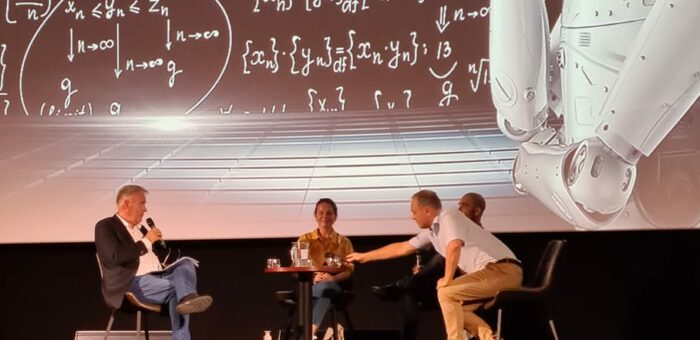
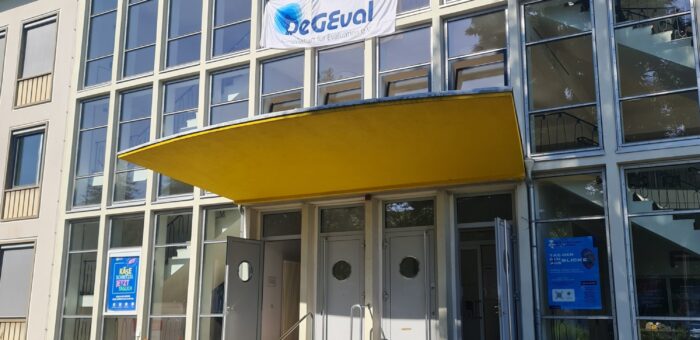
We're excited to share highlights from the recent DeGEval 2023 conference in Magdeburg, where our DIPF Edutec team was part of. DeGEval: A Hub for Evaluation - DeGEval, or the Society for Evaluation, is renowned for bridging academia and industry. It's dedicated to enhancing education through rigorous evaluation methods. Sebastian Wollny's Presentation - At the conference, Sebastian Wollny, alongside Claudia Zaviska from BIBB, Anne Küttel from University of Saarland, and Ricarda Schlimbach from Hochschule Heilbronn, showcased DIPF research on chatbots in vocational education. Attendees showed keen interest and shared their own experiences. Sebastian also presented findings from his literature review titled "Are We There Yet? - A Systematic Literature Review on Chatbots in Education," shedding light on the latest developments. Ricarda Schlimbach's StudyBuddy -  Ricarda Schlimbach shone the spotlight on…
Read More
New pub: Why You Should Give Your Students Automatic Process Feedback on Their Collaboration

New pub: Why You Should Give Your Students Automatic Process Feedback on Their Collaboration

Computer-supported collaborative learning, Conference, Feedback, Higher Education, Journal, Learning Analytics
In the ever-changing landscape of education, innovation is the key to ensuring that every student has access to quality learning experiences. A transformative approach is Computer-Supported Collaborative Learning (CSCL), in which enables students to harness the power of teamwork to achieve learning outcomes that often exceed those they could reach individually. One of the strengths of CSCL is that it can give participant feedback on the quality of their collaborative work. This feedback not only aids individual growth but also enhances the group's overall dynamic. Traditionally, providing such feedback was a manual and time-intensive task, making it impractical for larger classes or scalable education programs. That's where this newly published paper comes into play. CSCL The paper “Why You Should Give Your Students Automatic Process Feedback on Their Collaboration: Evidence…
Read More
Reflecting on the 10th German Learning Analytics Workshop at DELFI 2023: A Decade of Insights and Lessons Introduction

Reflecting on the 10th German Learning Analytics Workshop at DELFI 2023: A Decade of Insights and Lessons Introduction

Conference, Higher Education, Learning Analytics, School, Workshop
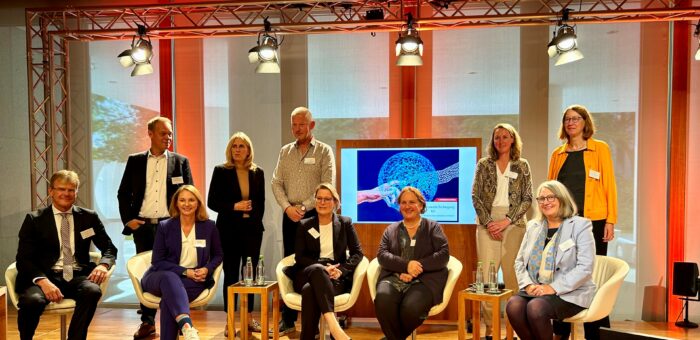
On September 11, 2023, the 10th Learning Analytics Workshop took place during the DELFI’23 and HDI’23 conferences in Aachen, Germany. This year marked a special milestone for the workshop as it celebrated "Ten years of learning analytics in German-speaking space: Success, failure and lessons learned." Co-organized by Ioana Jivet and featuring Hendrik Drachsler as a panelist, the workshop aimed to provide a comprehensive platform for sharing experiences, discussing research, and contemplating the future of learning analytics. A decade in review learning analytics has come a long way since its inception. Initially a niche area, it has now become an integral part of e-learning research, gaining prominence at international conferences like LAK and EDM. The recent pandemic-induced digitization in educational institutions has only accelerated this trend, making LA more visible and…
Read More
New Pub: How well does teacher education prepare for teaching with technology?

New Pub: How well does teacher education prepare for teaching with technology?

Competence development, Digitalisation, Empirical Study, Higher Education, Journal, Open access, Publication
Despite large-scale investments into the technological infrastructure of K-12 education, research has repeatedly shown that many teachers lack the expertise to effectively incorporate technology into classroom teaching. To support teachers in this, there is a need to understand how and when the relevant knowledge develops during teacher training. To this end, Joshua Weidlich and Marco Kalz conducted a study at Heidelberg University of Education, sampling prospective teachers (N = 526) and analyzing their self-reported technological pedagogical content knowledge (TPACK) across the seven dimensions of the framework. Specifically, they assessed (1) the extent to which students more advanced in their studies reported higher TPACK, (2) the effect of gender on these trajectories, and (3) the potential role of curricular cornerstones of the teacher education program. Regarding (1), they found that not…
Read More
Workshop: Teacher Dashboards supported by AI-generated Feedback @ JTEL Summer School 2023

Workshop: Teacher Dashboards supported by AI-generated Feedback @ JTEL Summer School 2023

Learning Analytics, School, Summer School, Workshop
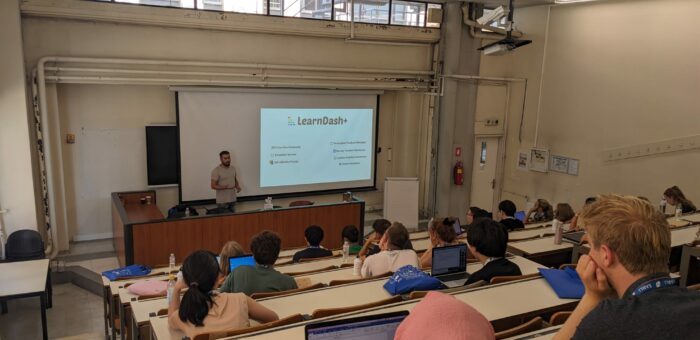
At the JTEL Summer School 2023 in La Manga, Spain, we hosted the “Teacher Dashboards supported by AI-generated Feedback” workshop. In this workshop, the Learning Analytics Cockpit (LA Cockpit), a tool developed by us, was presented and optimized by the participants. The LA Cockpit is a teacher dashboard that allows teachers to view the learning status of students through different visualizations and to interact with these visualizations to send feedback to (individual or groups of) students through a feedback system to “steer" the learning process. After a short intro on teacher dashboards and feedback theory, the tool with its visual feedback system was be tested "hands-on" by all participants in the workshop. Afterwards we discussed on how to improve the LA Cockpit and for which purposes teachers would ideally use…
Read More
New pub: Fostering children’s acceptance of educational apps

New pub: Fostering children’s acceptance of educational apps

Journal, Learning Design, School, Self-Regulation
In the field of educational applications (apps), the focus has shifted from mere functionality to creating enjoyable and beneficial learning experiences for children. A recently published article sheds light on the influence of redesigning a mobile learning activity in an app to enhance its appeal and usefulness to young learners. By exploring the relationship between children's enjoyment, intention to use and the incorporation of emojis, this study provides valuable insights into optimizing educational apps. The study involved 103 children aged 9 to 14 years, who participated in a 27-day exploration of a mobile learning app. The objective was to determine how different learning activities influenced children's intention to use the app. The researchers revamped a traditional learning activity, replacing it with an emoji-based representation of learning plans. Two other standard…
Read More
Keynote @ #JTELSS23 – Towards Highly Informative Learning Analytics

Keynote @ #JTELSS23 – Towards Highly Informative Learning Analytics

Conference, Feedback, Higher Education, Keynote, Learning Analytics, Learning Design, Summer School
Hendrik Drachsler delivered a keynote presentation at the 17th EATEL Summer School on Technology-Enhanced Learning (JTELSS 2023) in La Manga, Spain that unveiled groundbreaking insights from the Highly Informative and Learning Analytics (HILA) research program. This exciting initiative explores the effectiveness of HILA and the transformative power of data-enriched learning activities in providing highly informative feedback to students. Here a few highlights from Hendrik's keynote, showcasing the potential of HILA to revolutionize learning outcomes. The Power of Feedback Extensive research has long recognized the profound impact of feedback on learning success. Hendrik's presentation revealed that HILA surpasses traditional feedback methods by offering even higher efficacy. By going beyond simple right or wrong responses, HILA provides actionable feedback that enables students to exercise effective metacognitive control over their learning process. This…
Read More
New pub: Digitalisierung und Diagnostik in Schulen – Herausforderungen für Bildungspraxis und Bildungsforschung

New pub: Digitalisierung und Diagnostik in Schulen – Herausforderungen für Bildungspraxis und Bildungsforschung

Assessment, Book chapter, Computational Psychometrics, Digitalisation, Learning Analytics, Research Methods, Research topic, School
In the spring of 2020, schools faced an unprecedented challenge as the pandemic disrupted traditional modes of instruction and school development. With on-site learning replaced by digital formats and distance communication, educators had to quickly adapt to the new normal. Amidst these changes, the field of education encountered specific challenges related to digital school management, digital learning, and assessing learning progress. Particularly, computer-aided diagnostics emerged as a valuable tool for gaining insights not only into learning outcomes but also into the learning process itself. Researchers became intrigued by the potential of digital media in shaping learning experiences and how the resulting data could be effectively utilized in educational practice. This paper explores the current challenges and potentials in computer-based, learning-accompanying diagnostics. The primary hurdles involve implementing suitable instruments within schools…
Read More