
Didacta Presentation in Cologne: Key Questions to Find Fitting AI Solutions For Student Feedback

Didacta Presentation in Cologne: Key Questions to Find Fitting AI Solutions For Student Feedback

Artificial Intelligence, Feedback, General education, Invited talk, School
What are the goals of AI in education for student feedback? How can teachers make sure that their AI-assisted feedback goes beyond simple right/wrong statements and instead provides not only correct solutions, but also possibilities for improvement, hints on competence development and effective learning strategies? To find a fitting AI solution, there are key questions one should know to ask in advance. These questions were outlined by Hendrik Drachsler in his presentation at the didacta 2024 in Cologne on 20.02.2024 titled “Ihr KI-Anbieter-Test - 3 Schlüsselfragen die Sie kennen sollten.” The key questions: Question 1: What indicators does your AI product use to analyze learning outcomes? --> Look for AI products that provide relevant indicators for measuring learning progress and skills acquisition. These indicators are important to accurately assess learning…
Read More
Podcast “Sitzenbleiben” About AI in Education

Podcast “Sitzenbleiben” About AI in Education

Artificial Intelligence, General education, School
In a special edition of the DIPF podcast "Sitzenbleiben", Kai Maaz (Executive Director of DIPF) and Hendrik Drachsler discuss the potentials and hurdles of integrating artificial intelligence (AI) into education. The conversation surrounding AI's capabilities and constraints has been rapidly gaining traction. Especially the emergence of large language models like ChatGPT has revolutionized the text creation process, which showcase the vast opportunities that AI technologies can bring to the education sector. Questions abound regarding AI's impact on education: How can AI impact tasks such as homework or exams? How can AI enrich lessons? Which data protection issues need to be considered? How can students and educators receive adequate support in navigating AI's integration into learning environments? These questions serve as focal points which are examined in this newly available podcast…
Read More
SWK-Talk: Large Language Models and their potential in the education system

SWK-Talk: Large Language Models and their potential in the education system

Artificial Intelligence, Event, School
In the SWK Talk Special "Large Language Models and their potential in the education system" on 18.01.2024, the SWK (Standing Conference of the Ministers of Education and Cultural Affairs) presented its impulse paper on Large Language Models. For the impulse paper, the SWK consulted external experts, including members of the EduTec Team, on teaching and learning with AI and LLM. The aim was to contribute to the current debate on the potential of LLM in the education system. The key conclusion is that the German education system currently faces the task of trying to utilize the potentials of generative AI technologies such as LLM, while at the same time recognizing their limitations and finding a way to responsibly deal with their restrictions. The paper also emphasizes the importance of a…
Read More
New Pub: From the Automated Assessment of Student Essay Content to Highly Informative Feedback: a Case Study

New Pub: From the Automated Assessment of Student Essay Content to Highly Informative Feedback: a Case Study

Artificial Intelligence, Assessment, Computational Psychometrics, Empirical Study, Feedback, Higher Education, Journal, Publication, Special Issue, Technical paper
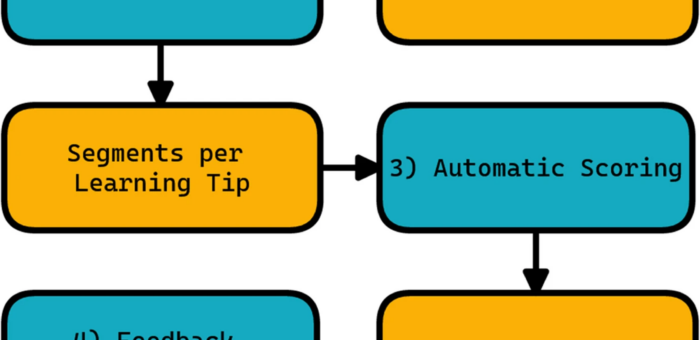
How can we give students highly informative feedback on their essays using natural language processing? In our new paper, led by Sebastian Gombert, we present a case study on using GBERT and T5 models to generate feedback for educational psychology students. In this paper: ➡ We implemented a two-step pipeline that segments the essays and predicts codes from the segments. The codes are used to generate feedback texts informing the students about the correctness of their solutions and the content areas they need to improve. ➡ We used 689 manually labelled essays as training data for our models. We compared GBERT, T5, and bag-of-words baselines for both steps. The results showed that the transformer-based models outperformed the baselines in both steps. ➡ We evaluated the feedback with a learner cohort…
Read More
New Article – Gender diversity dynamics in a Computer Supported Collaborative Learning

New Article – Gender diversity dynamics in a Computer Supported Collaborative Learning

Artificial Intelligence, Computer-supported collaborative learning, Digitalisation, Empirical Study, Gender, Higher Education, Journal, Learning Design, New Pub, Open access, Publication, Special Issue, Team
🎉 Exciting News! Our article has just been published in the magazine of Computer Assisted Learning! 📰 We delved into the fascinating world of online group learning among adults, unravelling the mysteries of emergent team roles and their intricate connection to gender dynamics in communication. 🌐👥 Have you ever wondered how team roles subtly surface and evolve in online group learning discussions? We did, too! Our research explores the subtle nuances of team roles and their subversive emergence, especially when viewed through the lens of gender diversity, in order to understand how to support more productive learning for all participants. Gender and gender diversity are group features affecting social interaction and are critical for gender-inclusive and equitable education. As such, the role of gender and gender diversity is of particular…
Read More
Exciting New BildungPLUS Podcast: Learning Analytics in the Age of AI

Exciting New BildungPLUS Podcast: Learning Analytics in the Age of AI

Artificial Intelligence, Learning Analytics
The studiumdigitale Podcast BildungPLUS invites listeners on a riveting journey into the dynamic world of educational research in the new episode titled “Learning Analytics in the Age of AI”. Prof. Dr. Hendrik Drachsler, Prof. Dr. Bart Rienties and Dr. Eyal Rabin unveil their recent experiences in Learning Analytics, sharing firsthand accounts of breakthroughs and challenges. With a keen focus on AI, the episode delves into anticipations surrounding artificial intelligence's transformative role in shaping personalized learning experiences. Stay tuned for a brief but insightful exploration of the future of education through the lens of Learning Analytics research and innovative AI applications. https://open.spotify.com/episode/5MMqdLhJoJcnwy9jSFDIN2?si=0d64ada4b61e4017&nd=1&dlsi=44dc68d0ceb445fa
Read More
Kickoff meeting of the DFG Research Group CORE

Kickoff meeting of the DFG Research Group CORE

Artificial Intelligence, Critical Online Reasoning, Event, Higher Education, Project meeting
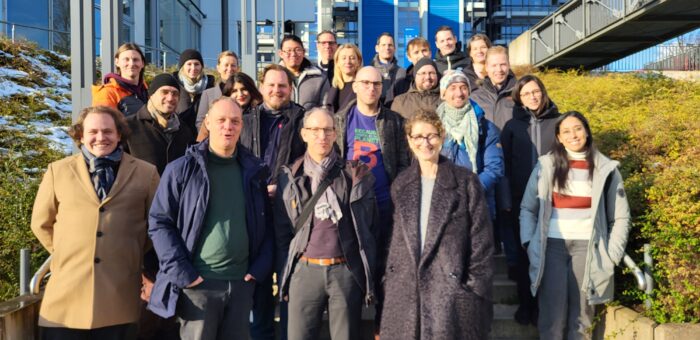
The Johannes Gutenberg University Mainz (JGU Mainz) hosted a two-day kickoff meeting from 05-06.12.23 for the DFG-Research Group CORE, a project dedicated to the study of critical online reasoning (COR) skills in higher education. The CORE project aims to explore the online learning behaviors and online information landscapes that students in medicine, physics, economics, and social sciences use for their studies.The event brought together a the CORE project partners as well as the international advisory board to discuss the project's goals, achievements so far, and future directions. Inclusion of International Advisory Board Members The kickoff meeting was enriched by the presence of members of the CORE project's international advisory board, these esteemed members provided valuable insights and recommendations for the project's advancement, stressing the importance of interdisciplinary cooperation in the study…
Read More
3rd IMPACT consortium meeting, a deep-dive into the rollout of Learning Analytics in the times of generative AI

3rd IMPACT consortium meeting, a deep-dive into the rollout of Learning Analytics in the times of generative AI

Artificial Intelligence, Event, Higher Education, Learning Analytics, Project
The IMPACT project held its third project meeting in Hagen, Germany, from 30.11-01.12.2023. The IMPACT project seeks to enhance higher education through the sizable implementation of Artificial Intelligence procedures for (partially) automated text analysis. Along the Student Life Cycle, prospective and current students receive highly informative, personalized feedback based on text during the orientation and entry phases, throughout the course of their studies (formative assessment), and upon the completion of academic performances (summative assessment). Supported by change management based on the SHEILA process model, five German universities are implementing text-based AI procedures. These include chatbots, personalized feedback systems for formative and summative assessments. The interdisciplinary consortium leverages internationally-tested open-source software solutions, along with shared standards for interoperability in higher education with learning management systems like Moodle, Stud.IP, ILIAS, Online Study…
Read More
16th eLearning Netzwerktag: An Insightful Recap of the Fast-Paced Year

16th eLearning Netzwerktag: An Insightful Recap of the Fast-Paced Year

Artificial Intelligence, Assessment, Augmented Reality, Competence development, Computational Psychometrics, Computer-supported collaborative learning, Conference, Event, Feedback, Gender, Higher Education, Learning Analytics, Learning Design
The annual eLearning Netzwerktag was a highly anticipated one-day event where the eLearning community of Frankfurt and the surrounding areas gathered to present the highlights of the past year to the public. On November 21, 2023, the event took place at Campus Westend, Goethe University Frankfurt am Main. Among the speakers, the Prof. Dr. Maren Scheffel, Prof. Dr. Franziska Matthäus , CIO of Goethe University Ulrich Schielein, Prof. Dr.Hendrik Drachsler, Director of studiumdigitale, delivered an opening speech that reflected on an incredible year, with a particular focus on the advancements in generative Artificial Intelligence applications. Hendrik Drachsler's speech highlighted the significant developments in the field of digital learning. At the previous Netzwerktag, applications like ChatGPT, Midjourney, Stablediffusions, and open language models (LLMs) such as LAMA were relatively unknown to most…
Read More
Keynote on Highly Informative Feedback with AI @ University of Bremen

Keynote on Highly Informative Feedback with AI @ University of Bremen

Artificial Intelligence, Event, Feedback, Higher Education, Invited talk, Learning Analytics, Learning Design
On November 29, 2023, the University of Bremen invited Hendrik Drachsler to deliver a keynote on AI and Learning Analytics in higher education. Hendrik presented the work of edutec.science and studiumdigitale, highlighting their advancements, challenges, and the future prospects of integrating AI-based systems for learning and teaching. The keynote shed light on the theoretical foundations, practical implications, and the importance of ethical considerations when harnessing the power of AI in education. During his speech, Hendrik acknowledged the significance of units like studiumdigitale, the central innovation unit for Technology-Enhanced Learning and Teaching at the Goethe University Frankfurt, Germany. He explained the SMS transfer process (Scouting-Maturing-Service transfer process) and its role in shaping the EdTech ecosystem of the university. Hendrik emphasized the impact of learning analytics—an emerging field that utilizes data to…
Read More