News

SWK-Talk: Large Language Models and their potential in the education system

SWK-Talk: Large Language Models and their potential in the education system

Artificial Intelligence, Event, School
In the SWK Talk Special "Large Language Models and their potential in the education system" on 18.01.2024, the SWK (Standing Conference of the Ministers of Education and Cultural Affairs) presented its impulse paper on Large Language Models. For the impulse paper, the SWK consulted external experts, including members of the EduTec Team, on teaching and learning with AI and LLM. The aim was to contribute to the current debate on the potential of LLM in the education system. The key conclusion is that the German education system currently faces the task of trying to utilize the potentials of generative AI technologies such as LLM, while at the same time recognizing their limitations and finding a way to responsibly deal with their restrictions. The paper also emphasizes the importance of a…
Read More
New Pub: From the Automated Assessment of Student Essay Content to Highly Informative Feedback: a Case Study

New Pub: From the Automated Assessment of Student Essay Content to Highly Informative Feedback: a Case Study

Artificial Intelligence, Assessment, Computational Psychometrics, Empirical Study, Feedback, Higher Education, Journal, Publication, Special Issue, Technical paper
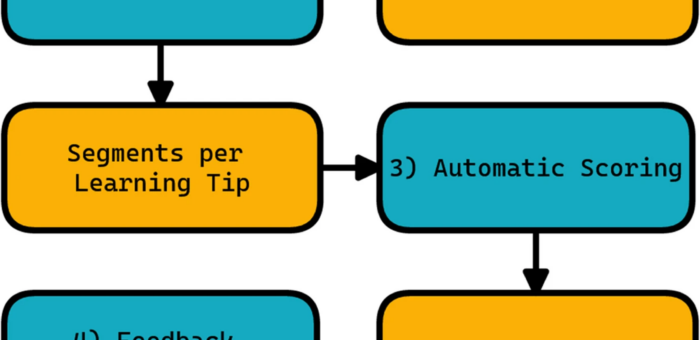
How can we give students highly informative feedback on their essays using natural language processing? In our new paper, led by Sebastian Gombert, we present a case study on using GBERT and T5 models to generate feedback for educational psychology students. In this paper: ➡ We implemented a two-step pipeline that segments the essays and predicts codes from the segments. The codes are used to generate feedback texts informing the students about the correctness of their solutions and the content areas they need to improve. ➡ We used 689 manually labelled essays as training data for our models. We compared GBERT, T5, and bag-of-words baselines for both steps. The results showed that the transformer-based models outperformed the baselines in both steps. ➡ We evaluated the feedback with a learner cohort…
Read More
New Article – Gender diversity dynamics in a Computer Supported Collaborative Learning

New Article – Gender diversity dynamics in a Computer Supported Collaborative Learning

Artificial Intelligence, Computer-supported collaborative learning, Digitalisation, Empirical Study, Gender, Higher Education, Journal, Learning Design, New Pub, Open access, Publication, Special Issue, Team
🎉 Exciting News! Our article has just been published in the magazine of Computer Assisted Learning! 📰 We delved into the fascinating world of online group learning among adults, unravelling the mysteries of emergent team roles and their intricate connection to gender dynamics in communication. 🌐👥 Have you ever wondered how team roles subtly surface and evolve in online group learning discussions? We did, too! Our research explores the subtle nuances of team roles and their subversive emergence, especially when viewed through the lens of gender diversity, in order to understand how to support more productive learning for all participants. Gender and gender diversity are group features affecting social interaction and are critical for gender-inclusive and equitable education. As such, the role of gender and gender diversity is of particular…
Read More
New Pub: Toward a comprehensive framework of social presence

New Pub: Toward a comprehensive framework of social presence

Computer-supported collaborative learning, Higher Education, Journal, Literature review, New Pub, Open access, Special Issue
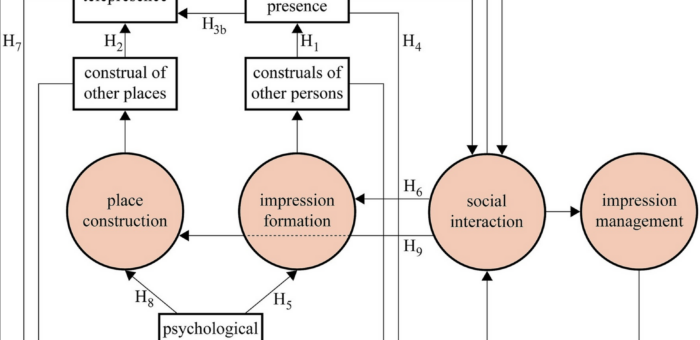
Today, students in higher education likely come into contact with different modes of learning, e.g. online learning, blended learning, and, increasingly, hybrid learning. To the extent that communication is mediated by technology in these learning modes, students can experience varying degrees of social presence with regard to their peers. Social presence refers to the feeling that others are 'real' and 'close' despite the physical separation. Especially in learning scenarios that require communication and collaboration, social presence is a crucial consideration. Despite this, research on social presence is fragmented and many other relevant theoretical accounts, while potentially informative, have been neglected. This paper, coauthored by Karel Kreijns, Jane Yau, Joshua Weidlich, and Armin Weinberger, published in Frontiers in Education, Section Digital Education, attempts to provide a comprehensive account of social presence…
Read More
2023 in a Nutshell: A year of unbridled discovery, innovation, and collaboration, and a little help of AI. 

2023 in a Nutshell: A year of unbridled discovery, innovation, and collaboration, and a little help of AI. 

Team
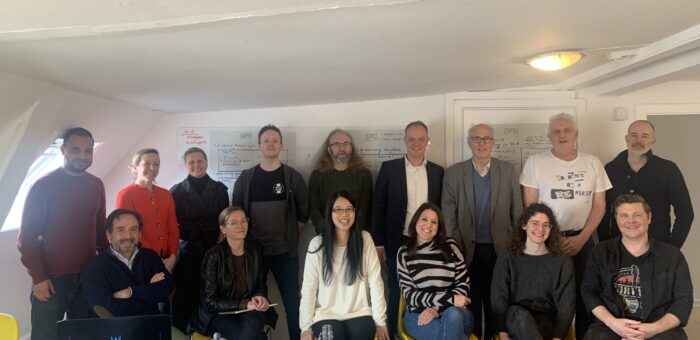
What made this year special? Is it possible to reduce this year to just a few essential words? With all the people in our group, the many projects we worked on, the many publications we have written, and the events we have participated in, a lot has happened in 2023.  Let’s take a closer look at some of the highlights:   Projects and Conferences At EduTec.science, just like every year, we're committed to enhancing our understanding of education and exploring the potential impact of technology interventions. Our primary focus is on executing research projects, collecting solid data sets, conducting rigorous analysis of the effects of technology on learning and teaching, and publishing our results in accordance with the highest quality standards. The significant advancements in generative AI and the transformative…
Read More
PhD defense on Technological Responses to Distracting Media Multitasking in Digital Learning Environments

PhD defense on Technological Responses to Distracting Media Multitasking in Digital Learning Environments

Award, Higher Education, Learning Analytics, PhD defense, School, Self-Regulation
Today, we proudly acknowledge the remarkable achievement of our team member, Daniel Biedermann, in successfully defending his PhD thesis to become Dr. Biedermann. Woohoo, congratulations! In our modern world, the reality of digital distractions through the attention economy cannot be denied. Countries like the Netherlands, for instance, are planning to ban mobiles from classrooms starting from 2024. Daniel's PhD work centered on the complex challenges of digital media distraction, a phenomenon that's prevalent largely due to our pervasive use of social media and notification systems on our phones, PCs, and tablets. Presented in his disputation, Daniel argued the need for a context-sensitive system to gain a more profound understanding of digital media distraction. In addition, Daniel addressed the crucial subject of digital self-control tools (DSCTs). His research, which provided a…
Read More
Exciting New BildungPLUS Podcast: Learning Analytics in the Age of AI

Exciting New BildungPLUS Podcast: Learning Analytics in the Age of AI

Artificial Intelligence, Learning Analytics
The studiumdigitale Podcast BildungPLUS invites listeners on a riveting journey into the dynamic world of educational research in the new episode titled “Learning Analytics in the Age of AI”. Prof. Dr. Hendrik Drachsler, Prof. Dr. Bart Rienties and Dr. Eyal Rabin unveil their recent experiences in Learning Analytics, sharing firsthand accounts of breakthroughs and challenges. With a keen focus on AI, the episode delves into anticipations surrounding artificial intelligence's transformative role in shaping personalized learning experiences. Stay tuned for a brief but insightful exploration of the future of education through the lens of Learning Analytics research and innovative AI applications. https://open.spotify.com/episode/5MMqdLhJoJcnwy9jSFDIN2?si=0d64ada4b61e4017&nd=1&dlsi=44dc68d0ceb445fa
Read More
Kickoff meeting of the DFG Research Group CORE

Kickoff meeting of the DFG Research Group CORE

Artificial Intelligence, Critical Online Reasoning, Event, Higher Education, Project meeting
The Johannes Gutenberg University Mainz (JGU Mainz) hosted a two-day kickoff meeting from 05-06.12.23 for the DFG-Research Group CORE, a project dedicated to the study of critical online reasoning (COR) skills in higher education. The CORE project aims to explore the online learning behaviors and online information landscapes that students in medicine, physics, economics, and social sciences use for their studies.The event brought together a the CORE project partners as well as the international advisory board to discuss the project's goals, achievements so far, and future directions. Inclusion of International Advisory Board Members The kickoff meeting was enriched by the presence of members of the CORE project's international advisory board, these esteemed members provided valuable insights and recommendations for the project's advancement, stressing the importance of interdisciplinary cooperation in the study…
Read More
3rd IMPACT consortium meeting, a deep-dive into the rollout of Learning Analytics in the times of generative AI

3rd IMPACT consortium meeting, a deep-dive into the rollout of Learning Analytics in the times of generative AI

Artificial Intelligence, Event, Higher Education, Learning Analytics, Project
The IMPACT project held its third project meeting in Hagen, Germany, from 30.11-01.12.2023. The IMPACT project seeks to enhance higher education through the sizable implementation of Artificial Intelligence procedures for (partially) automated text analysis. Along the Student Life Cycle, prospective and current students receive highly informative, personalized feedback based on text during the orientation and entry phases, throughout the course of their studies (formative assessment), and upon the completion of academic performances (summative assessment). Supported by change management based on the SHEILA process model, five German universities are implementing text-based AI procedures. These include chatbots, personalized feedback systems for formative and summative assessments. The interdisciplinary consortium leverages internationally-tested open-source software solutions, along with shared standards for interoperability in higher education with learning management systems like Moodle, Stud.IP, ILIAS, Online Study…
Read More
Enhancing Learning with Data-enriched Activities: Insights from the HIKOF/IMPACT Workshop at eLearning Netzwerktag 2023

Enhancing Learning with Data-enriched Activities: Insights from the HIKOF/IMPACT Workshop at eLearning Netzwerktag 2023

Conference, Event, Feedback, Higher Education, Learning Analytics, Learning Design, Project, Workshop
At the 16te eLearning Netzwerktag 2023, participants had the opportunity to engage in various thought-provoking workshops. One workshop that stood out was the HIKOF/IMPACT session, where the edutec.science members from these AI projects shed light on the development of Data-enriched Learning Activities (DeLAs). This interactive workshop showcased how DeLAs offer valuable insights into students' competency development within digital learning activities. Let's delve into the details of how the HIKOF/IMPACT projects, part of the HILA research program, are revolutionizing eLearning through the implementation of DeLAs. The HIKOF/IMPACT workshop focused on exploring the concept and implementation of Data-enriched Learning Activities. Through DeLAs, educators gain unique insights into students' competency development during digital learning processes. These activities represent a powerful approach that leverages AI to analyze real-time data and provide highly informative feedback…
Read More