New Pub: Extending Social Presence Theory

New Pub: Extending Social Presence Theory

Empirical Study, Higher Education, Journal, Learning Design, Publication
In the area of online learning and distance education, social presence is considered a key concept to understand interpersonal processes that are mediated by technology. At the same time, theory surrounding social presence remains underdeveloped. For example, under which conditions is social presence particularly important? Do students always need high perceptions of social presence in their learning experiences? A strong theory should provide tentative answers to questions like these. Yet, as of now, our knowledge is mostly restricted to correlations coefficients between measures of social presence and outcome variables like satisfaction. Without further nuance, learning designers do not know under which circumstances they should prioritize designing for interpersonal aspects or instead focus on other aspects. To advance a more nuanced understanding of social presence, Joshua Weidlich, Derya Göksün, and Karel…
Read More
New HIKOF-DL Video – Introduction to the project

New HIKOF-DL Video – Introduction to the project

Artificial Intelligence, Assessment, Higher Education, Learning Analytics, Project
  Studiumdigitale at Goethe University Frankfurt has created an informative video to introduce the HIKOF-DL project. HIKOF-DL stands for Hoch Informatives und Kompetenzorientiertes Feedback für das Digitale Lernen and is funded by the Hessen Ministry for Digital Strategy and Development from 2021-2024. Prof. Dr. Hendrik Drachsler, Prof. Dr. Andreas Frey as well as Dr. David Weiss are project leaders of this interdisciplinary project. In the video below, they explained their roles and vision in this joint project. For more information about the project, please see the project website here: https://hikof.uni-frankfurt.de/

Read More
New Pub: Analytics for Supporting Teaching Success in Higher Education: A Systematic Review

New Pub: Analytics for Supporting Teaching Success in Higher Education: A Systematic Review

Conference, Higher Education, Learning Analytics, Literature review, Publication
Learning analytics are utilized to support learners’ educational needs as well as to enhance their study success, for example, via the use of real-time prompts, motivational dashboards, and appropriate learning interventions, which have been shown to increase students’ academic performance as well as their course retention rates. Yet, the perspective of higher education teachers in utilizing analytics to help analyze, reflect on, and improve their teaching design prior to delivery as well as to monitor and measure how the students engaged withtheir learning processes has been less recognized. In this paper, we present the results of a systematic review conducted from higher education teachers’ perspective concerning how analytics can be deployed to adapt the curriculum to suit better students’ educational needs in order to increase their study success. Thirty-five key…
Read More
Presentation about detecting off-task behavior during learning at the GEBF 2022

Presentation about detecting off-task behavior during learning at the GEBF 2022

Conference, Event, Higher Education, Learning Analytics, Research topic, Self-Regulation
On 09.03.2022, Daniel Biedermann gave a presentation on the topic of recognizing off-task behavior as part of the GEBF conference. The talk was part of the symposium on "Self-Regulation in Learning in Digital Environments: From Problems to Solutions". The talk presented the endeavor of using process data within a learning environment to detect and predict off-task behavior. Special attention was given to the challenges that arise when detecting off-task behavior. The same observed activity may be considered off-task in one case, but relevant to learning in another. Making this distinction requires a precise grasp of the context in which the observed behavior takes place. Aspects such as what phase of learning was someone in when another web page was accessed? Had the learning material already been processed? Or was the…
Read More
Keynote at LERN Jahrestagung 2022

Keynote at LERN Jahrestagung 2022

Computational Psychometrics, Higher Education, Invited talk, Keynote, Learning Analytics, Learning Design, School
On 30 March 2022, Hendrik Drachsler gave an invited keynote at the LERN conference 2022 where he reported on the latest research on data-driven high informative feedback in higher education and schools. The talk focused on the experience of edutec.science research collective that has been gained in the projects DIFA, HIKOF-DL, AFLEK and ALICE. The presentation provided an overview of actionable and supportive feedback to learners as well as the various technical products that the EduTec group has developed. It, therefore, applies web technology to support meta-cognitive and collaborative learning skills with high-informative feedback methods. Hendrik applies validated measurement instruments from the field of psychometrics and investigates to what extent Learning Analytics interventions can reproduce the findings of these instruments. He discussed the lessons learned from implementing TLA systems. He…
Read More
New Pub: Chapter in Learning Analytics Handbook 2022

New Pub: Chapter in Learning Analytics Handbook 2022

Higher Education, Learning Analytics
More and more higher education institutions have been making use of learning analytics in the last few years. But despite an increased funding and more research in the learning analytics domain, there is still a lack of systematic and large-scale implementations of learning analytics. In order to improve learning analytics adoption and to establish it sustainably, higher education institutions need to align learning analytics-related activities with their goals and visions. Their making us of data requires a set of guidelines and principles, i.e. a policy, that fits their context and speaks to all involved stakeholders. Only then can the effective and responsible use of learning analytics be ensured and will higher education institutions be truly able to establish learning analytics in a sustainable way. Reference: Scheffel, M., Tsai, Y.-S., Gašević,…
Read More
New Pub: Towards Collaborative Convergence: Quantifying Collaboration Quality with Automated Co-located Collaboration Analytics

New Pub: Towards Collaborative Convergence: Quantifying Collaboration Quality with Automated Co-located Collaboration Analytics

Conference, Conference, Event, Higher Education, Learning Design, Multimodal Learning Analytics, Publication
Collaboration is one of the four important 21st-century skills. With the pervasive use of sensors, interest on co-located collaboration (CC) has increased lately. Most related literature used the audio modality to detect indicators of collaboration (such as total speaking time and turn taking). CC takes place in physical spaces where group members share their social (i.e., non-verbal audio indicators like speaking time, gestures) and epistemic space (i.e., verbal audio indicators like the content of the conversation). Past literature has mostly focused on the social space to detect the quality of collaboration. In this study, we focus on both social and epistemic space with an emphasis on the epistemic space to understand different evolving collaboration patterns and collaborative convergence and quantify collaboration quality. We conduct field trials by collecting audio recordings…
Read More
New Pub: Measuring Productivity in CSCL groups

New Pub: Measuring Productivity in CSCL groups

Assessment, Conference, Empirical Study, Higher Education, Learning Design, Publication
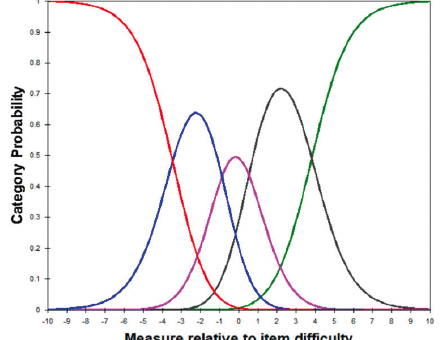
Computer-supported collaborative learning (CSCL) is a common pedagogical approach, in which groups of students work together digitally to engage in learning activities, solve problems, or create a shared artefact. CSCL is further interesting from a research standpoint, because different disciplines want to understand the processes and circumstances from which productive social interaction in online groups emerge to facilitate learning among group members. As such, group productivity is a central outcome to be considered in CSCL research. At the same time, the current literature does not provide a valid and reliable self-report instrument to measure group productivity.   [caption id="attachment_3914" align="alignleft" width="325"] Wright Map[/caption] [caption id="attachment_3915" align="alignleft" width="323"] Category probability curves with six (top) versus 5 (bottom) rating scale steps[/caption]                      …
Read More
PhD defense: Measuring the Unmeasurable? Towards Automatic Co-located Collaboration Analytics

PhD defense: Measuring the Unmeasurable? Towards Automatic Co-located Collaboration Analytics

Artificial Intelligence, Book, Higher Education, Learning Analytics, Multimodal Learning Analytics, PhD defense, Press
Collaboration is one of the most important skills in the 21st century. Education, therefore, focuses on learning to cooperate, both in online and face-to-face settings. Learning Analytics is increasingly being used to analyse collaborations. Can face-to-face collaborations be analysed automatically by means of sensor technology? And what is the quality of the analyses generated by this? Sambit Praharaj developed a technical prototype to achieve automated collaboration analytics. On Friday 11 March 2022 at 1.30 pm Sambit defended his thesis 'Measuring the Unmeasurable? Towards Automatic Co-located Collaboration Analytics' at the Open University in Heerlen. Collaboration analytics using sensor technology Sambit Praharaj investigated the possibilities of automating collaboration analytics in face-to-face settings. He developed a prototype that measures the quality of collaboration. Praharaj also developed a dashboard that visualises the data and…
Read More
Webinar: What happens when students get to choose indicators on customisable dashboards?

Webinar: What happens when students get to choose indicators on customisable dashboards?

Conference, Higher Education, Learning Analytics, Webinar
Learning analytics dashboards (LADs) are essentially feedback tools for learners. However, until recently, learners rarely have had a role in designing LADs, especially in deciding the information they would like to receive through such devices. Although learners might not always know what they need to self-manage their learning, we need to understand what type of feedback information and dashboard features they are likely to engage with and if, when, and how they use dashboards. To explore how LADs can better meet the needs of learners, we have embarked on two sets of studies aiming to understand students' information needs. In the first set of studies, we developed a customisable LAD for Coursera MOOCs on which learners can set goals and choose feedback indicators to monitor. We then analysed the learners'…
Read More