New Pub: special issue “From Sensor Data to Educational Insights”

New Pub: special issue “From Sensor Data to Educational Insights”

Special Issue
We are delighted to announce an editorial of the MDPI Sensors special issue "From Sensor Data to Educational Insights" published in Open Access written by José A. Ruipérez-Valiente, Roberto Martínez-Maldonado, Daniele Di Mitri  Jan Schneider. The editorial introduces 12 novel scientific articles in the field of educational sensors. The full special issue can be found on the MDPI website.
Read More
Presentation: Atezaz participated in the ICDLE conference and presented a new publication

Presentation: Atezaz participated in the ICDLE conference and presented a new publication

Artificial Intelligence, Conference, Conference, Feedback, Further Education, Learning Analytics, Lifelong Learning, Open access, Publication, Self-Regulation
Our paper titled "Caught in the Lifelong Learning Maze: Helping People with Learning Analytics and Chatbots to Find Personal Career Paths" was accepted at the 13th International Conference on Distance Learning and Education (ICDLE 2022) held at the University of Barcelona, Spain. Atezaz Ahmad participated in the conference and presented their publication. The article will be published (open access) in the International Journal of Information and Education Technology. Abstract: Current lifelong learning platforms offer users a query option to select a wide variety of courses. However, finding a suitable course among the seemingly endless catalogs of options presented by the platforms is not straightforward. We argue that digital counseling can enhance this process. In this paper, we present a set of three formative studies where we explored the main aspects…
Read More
New Pub: Untangling connections between challenges in the adoption of learning analytics in higher education

New Pub: Untangling connections between challenges in the adoption of learning analytics in higher education

Empirical Study, Higher Education, Journal, Learning Analytics, Publication
[caption id="attachment_4599" align="alignnone" width="967"] Associations of challenges and ethics: (a) none, (b) prep-partial, and (c) full adoption institutions[/caption] Potential benefits of learning analytics (LA) for improving students' performance, predicting students' success, and enhancing teaching and learning practice have increasingly been recognized in higher education. However, the adoption of LA in higher education institutions (HEIs) to date remains sporadic and predominantly small in scale due to several socio-technical challenges. To better understand why HEIs struggle to scale LA adoption, it is needed to untangle adoption challenges and their related factors. This paper presents the findings of a study that sought to investigate the associations of adoption factors with challenges HEIs face in the adoption of LA and how these associations are compared among HEIs at different scopes of adoption. The study…
Read More
New Pub: Effect of social support features via buddies in app-based habit building

New Pub: Effect of social support features via buddies in app-based habit building

Conference, Publication
During 10-12 October 2022 at the World Conference on Mobile, Blended and Seamless Learning (mLearn), the full paper "Effect of social support features via buddies in app-based habit building" was presented. The paper will also appear in the mLearn 2022 proceedings. The authors of the paper are Daniel Biedermann, Patrick Schwarz, Jane Yau and Hendrik Drachsler. The abstract is as follows: App-based habit building has been shown to be a good tool for building desired habits, however it is unclear how much individual features that are present in many apps contribute to the success of habit building. In this paper, the authors consider the influence of social support features by developing an app in which habit progress was shared with peers. In the study, 38 participants created habits and monitored…
Read More
New Pub: the Multimodal Learning Analytics Handbook

New Pub: the Multimodal Learning Analytics Handbook

Book, Publication
Finally published, the new book "The Multimodal Learning Analytics Handbook" published by Springer edited by Michail Giannakos, Daniel Spikol, Daniele Di Mitri, Kshitij Sharma, Xavier Ochoa, Rawad Hammad. The book is the first comprehensive resource in the area of multimodal data for learning. State-of-the-art machine learning and AI methods for making sense of complex learning data. It explores the role and impact of multimodal data on teaching, learning, and training.
Read More
New Pub: Multimodal Learning Experience for Deliberate Practice

New Pub: Multimodal Learning Experience for Deliberate Practice

Book chapter
A new book chapter has been published as part of the Multimodal Learning Analytics Handbook edited by Springer. While digital education technologies have improved to make educational resources more available, the modes of interaction they implement remain largely unnatural for the learner. Modern sensor-enabled computer systems allow extending human-computer interfaces for multimodal communication. Advances in Artificial Intelligence allow interpreting the data collected from multimodal and multi-sensor devices. These insights can be used to support deliberate practice with personalised feedback and adaptation through Multimodal Learning Experiences (MLX). This chapter elaborates on the approaches, architectures, and methodologies in five different use cases that use multimodal learning analytics applications for deliberate practice. Di Mitri, D., Schneider, J., Limbu, B., Mat Sanusi, K.A., Klemke, R. (2022). Multimodal Learning Experience for Deliberate Practice. In: Giannakos,…
Read More
Keynote: Artificial Intelligence and Immersive Technologies for Feedback Augmentation

Keynote: Artificial Intelligence and Immersive Technologies for Feedback Augmentation

Invited talk, Keynote
On 5th October 2022, Dr Daniele Di Mitri was invited to give a keynote workshop at the SITE interactive online conference. Keynote Workshop: Artificial Intelligence and Immersive Technologies for Feedback Augmentation Abstract: Twenty-first-century learners are continuously required to nurture their competencies by acquiring new knowledge and mastering new skills. A way to meet this significant demand for learning is to offer learners continuous instruction and timely feedback. In the internet era, learners have access to a large variety of educational content outside formal education curricula, including online courses or video lectures. Unfortunately, access to content alone is not sufficient for guaranteeing learning. What is needed, and often lacking, is proper guidance and feedback. Artificial Intelligence (AI) systems can provide automatic, personalised, real-time feedback to learners in distance learning settings when…
Read More
New Pub: Considerations in Feedback and Periodization for the Multimodal Learning Experience of Running via Wearable Devices

New Pub: Considerations in Feedback and Periodization for the Multimodal Learning Experience of Running via Wearable Devices

Workshop
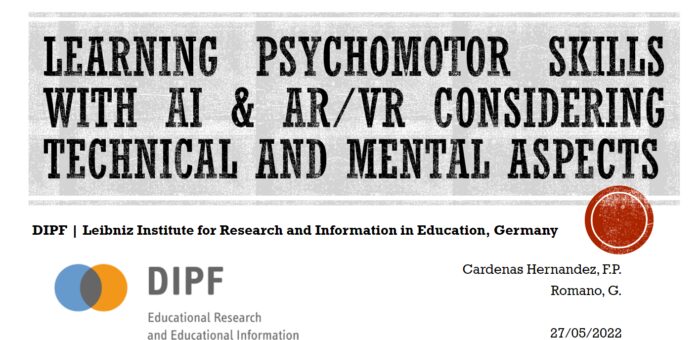
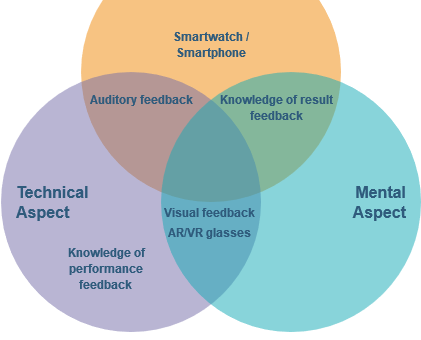
On September 13, during the MILeS 2022 – Multimodal Immersive Learning Systems workshop that took place at EC-TEL 2022 conference in Toulouse, France, the paper entitled Considerations in Feedback and Periodization for the Multimodal Learning Experience of Running via Wearable Devices was presented. This paper, which will appear in the CEUR Workshop Proceedings, was written by Fernando P. Cardenas-Hernandez, and Jan Schneider. Abstract. For the integral learning/training of a psychomotor activity such as running, it is necessary to target not only the physical aspects but also the technical and mental aspects that make it up, an alternative to solve this issue is through the understanding and consideration of feedback and periodization, which are elements that constitute and influence transcendentally and differently each of the three aspects involved. That is why,…

Read More
New Pub: Superpowers in the Classroom: Hyperchalk is an Online Whiteboard for Learning Analytics Data Collection

New Pub: Superpowers in the Classroom: Hyperchalk is an Online Whiteboard for Learning Analytics Data Collection

Computer-supported collaborative learning, Conference, Conference, Event, Further Education, General education, Higher Education, Learning Analytics, Lifelong Learning, Publication, School, Technical paper
A new system demonstration paper authored by Lukas Menzel, Sebastian Gombert, Daniele Di Mitri and Henrik Drachsler has been released as part of the ECTEL 2022 proceedings. In this paper, we present Hyperchalk, a self-hosted collaborative online whiteboard software. Similar to commercial solutions like Miro or Flinga, this software provides users with collaborative boards which they can use to draw, write or sketch together. However, unlike commercial solutions, Hyperchalk allows for collecting rich log data, which can be used to study the behaviour of its users and to allow Learning Analytics and studies on computer-supported collaborative learning. Moreover, Hyperchalk comes with a built-in replay mode which allows watching how users behave in its spaces. It supports the LTI1.3 standard, which enables seamless integration with learning management systems such as Moodle,…
Read More
New Pub: Meaningful Feedback from Wearable Sensor Data to Train Psychomotor Skill

New Pub: Meaningful Feedback from Wearable Sensor Data to Train Psychomotor Skill

Workshop
A new workshop paper was presented at the MILeS 2022 workshop written by Gianluca Romano entitled: Meaningful Feedback from Wearable Sensor Data to Train Psychomotor Skill. The MILeS 2022 – Multimodal Immersive Learning Systems workshop took place on the 13th of September at EC-TEL 2022 conference taking place in Toulouse, France. The paper will appear in the CEUR proceedings. Abstract. Learning psycho-motor skills requires feedback for improvement and give insight on performance. However, providing feedback is not trivial. Every learner is different and the same feedback might not work for everyone. The workshop aims to make participants aware of the problematic transition from analyzed wearable sensor data to meaningful feedback. Thus, the participants will get more familiar with wearable sensor data and directly experience how learners might want to receive feedback that they deem…
Read More