Workshop: Large Language Models for Feedback Generation @ JTEL Summer School 2023

Workshop: Large Language Models for Feedback Generation @ JTEL Summer School 2023

Artificial Intelligence, Feedback, Summer School, Workshop
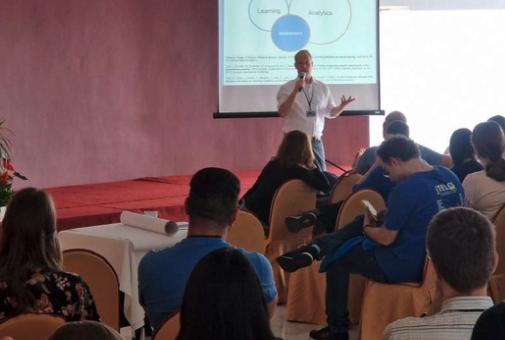
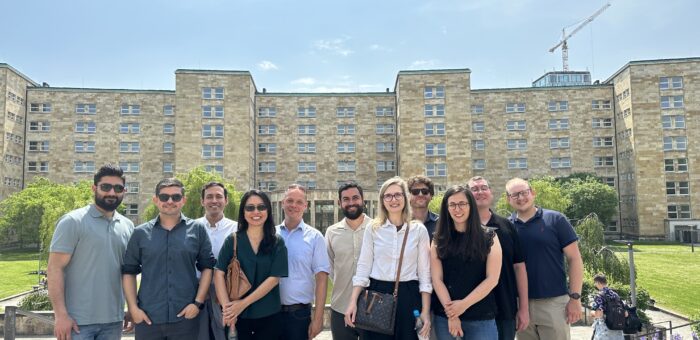
At the seventeenth JTEL Summer School, Lukas Menzel and I had the pleasure of giving a workshop on the potentials and pitfalls of large language models for generating learner feedback. We kicked the event off with a general presentation on large language models. We explained the technical properties of well-known language models such as BERT or GPT. Following this, we went into different setups that can be used for feedback generation. On the one hand, this can involve training a BERT-based model to predict codes for input responses that trigger OnTask-style feedback rules. While this approach is stable regarding what feedback students receive, it is also inflexible, as such feedback cannot necessarily mirror all detailed intricacies that might occur in a student's response. For this reason, it can feel kind…
Read More
New pub: Fostering children’s acceptance of educational apps

New pub: Fostering children’s acceptance of educational apps

Journal, Learning Design, School, Self-Regulation
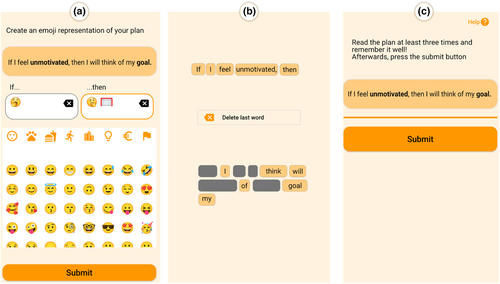
In the field of educational applications (apps), the focus has shifted from mere functionality to creating enjoyable and beneficial learning experiences for children. A recently published article sheds light on the influence of redesigning a mobile learning activity in an app to enhance its appeal and usefulness to young learners. By exploring the relationship between children's enjoyment, intention to use and the incorporation of emojis, this study provides valuable insights into optimizing educational apps. The study involved 103 children aged 9 to 14 years, who participated in a 27-day exploration of a mobile learning app. The objective was to determine how different learning activities influenced children's intention to use the app. The researchers revamped a traditional learning activity, replacing it with an emoji-based representation of learning plans. Two other standard…
Read More
Workshop @ JTELSS – Visualizing Real-World Learning Analytics

Workshop @ JTELSS – Visualizing Real-World Learning Analytics

Learning Analytics, Self-Regulation, Workshop
In this workshop, Atezaz Ahmad, Kamran Mir, Jan Schneider and Daniele Di Mitri presented two datasets (IWWB and Presentation Trainer) to the participants. There were three main tasks: Investigate the datasets and how it could be used to design analytics dashboards. - Participants were asked to use HyperChalk and OpenLAIR to design their solutions. What are some limitations of the current datasets. - List the problems/issues with the datasets and how to improve them. What indicators will we get from this datasets. - List/Name the indicators. At the end of the workshop, we asked the participants to fill out a survey. The survey was about evaluating the IWWB+ analytics dashboard. Here are some pictures of the results:
Read More
Keynote @ #JTELSS23 – Towards Highly Informative Learning Analytics

Keynote @ #JTELSS23 – Towards Highly Informative Learning Analytics

Conference, Feedback, Higher Education, Keynote, Learning Analytics, Learning Design, Summer School
Hendrik Drachsler delivered a keynote presentation at the 17th EATEL Summer School on Technology-Enhanced Learning (JTELSS 2023) in La Manga, Spain that unveiled groundbreaking insights from the Highly Informative and Learning Analytics (HILA) research program. This exciting initiative explores the effectiveness of HILA and the transformative power of data-enriched learning activities in providing highly informative feedback to students. Here a few highlights from Hendrik's keynote, showcasing the potential of HILA to revolutionize learning outcomes. The Power of Feedback Extensive research has long recognized the profound impact of feedback on learning success. Hendrik's presentation revealed that HILA surpasses traditional feedback methods by offering even higher efficacy. By going beyond simple right or wrong responses, HILA provides actionable feedback that enables students to exercise effective metacognitive control over their learning process. This…
Read More
Advancing Education with “AI in the Loop” Interfaces @ #JTELSS23

Advancing Education with “AI in the Loop” Interfaces @ #JTELSS23

Artificial Intelligence, Summer School, Workshop
From June 3rd to 10th, the city of La Manga in Spain hosted an exciting event, the Seventeenth EATEL Summer School on Technology Enhanced Learning (JTELSS 2023). Among the talented researchers organizing this renowned summer school for young TEL researchers in Europe, Sebastian Wollny contributed with a workshop focused on the speed design challenge. The challenge this year was to design an "AI in the Loop" interface specifically aimed at helping teachers analyze Exit Slips. These short reflection tasks, given at the end of a lesson, offer valuable insights into student comprehension and learning. However, teachers often struggle with limited time to thoroughly analyze these Exit Slips. Sebastian encouraged participants to place the human at the center of their design while incorporating artificial intelligence, embracing the concept of "AI in…
Read More
New pub: Measuring Collaboration Quality Through Audio Data and Learning Analytics

New pub: Measuring Collaboration Quality Through Audio Data and Learning Analytics

Book chapter, Computer-supported collaborative learning, Learning Analytics, Multimodal Learning Analytics
In the rapidly evolving twenty-first century, collaboration stands as a vital skill. Recognizing its significance, the detection of collaboration quality can play a pivotal role in fostering effective teamwork. This newly published chapter dives into the realm of collaboration quality detection and measurement, aiming to achieve the following objectives: Defining collaboration quality by leveraging audio data and unobtrusive learning analytics measures. Detailing the design of a sensor-based setup specifically tailored for automatic collaboration analytics. Advancing the quantification of collaboration quality through the utilization of this setup and presenting the analysis using insightful visualizations. Moreover, the chapter delves into the challenges and issues at hand while exploring potential solutions that build upon existing research. To elucidate the various objectives, the terminology of "indicators" (i.e., the events) and "indexes" (i.e., the process)…
Read More
New pub: Lernpfade in adaptiven und künstlich-intelligenten Lernprogramme

New pub: Lernpfade in adaptiven und künstlich-intelligenten Lernprogramme

Artificial Intelligence, Book chapter, Learning Analytics, Research Methods
In this newly published book chapter, the authors delve into the comparison between interactive, adaptive and artificially intelligent learning programs. While adaptive and AI-based applications offer promising potential, they face greater complexity in their development and have yet to fully establish themselves. To evaluate the prospects of these technologies, their respective capabilities are explored. Adaptive learning programs prove effective in skill acquisition, while AI-based solutions shine in cases where an explicit expertise model is challenging to articulate. The didactic and pedagogical challenges that lie ahead for AI-based learning applications are also highlight. By examining these factors, valuable insights are gained into the landscape of advanced learning technologies and their future implications. Reference: Kerres, M., Buntins, K., Buchner, J., Drachsler, H., & Zawacki-Richter, O.. (In Press). Lernpfade in adaptiven und künstlich-intelligenten…
Read More
New pub: Evaluating the Impact of FoLA on Learning Analytics Knowledge Creation

New pub: Evaluating the Impact of FoLA on Learning Analytics Knowledge Creation

Journal, Learning Analytics, Learning Design, Publication, Research Methods, Research topic, Special Issue
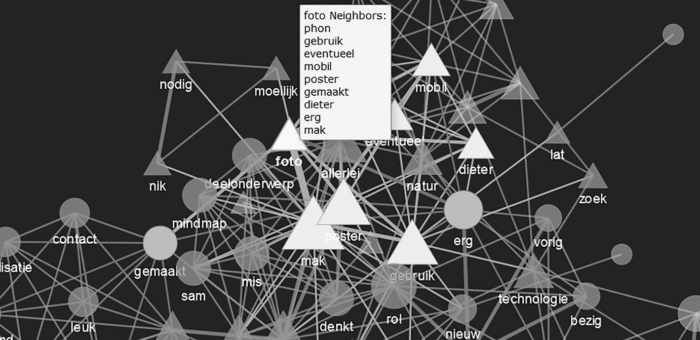
Learning analytics provides opportunities to improve the design of learning activities by supplying information on the effects of different learning approaches. Despite the existence of design methods that aim to facilitate the incorporation of learning analytics into learning design, there is a lack of research assessing their efficacy. This study aims to evaluate the effectiveness of the FoLA2 method. In higher education settings, sixty participants utilized the FoLA2 method to develop fourteen learning activities. To gauge the impact, participants completed a technology acceptance test before and after each session. Furthermore, researchers analyzed audio recordings of the sessions using epistemic network analysis to gain insights into the discussions regarding learning analytics and the creation of enhanced learning activities. The results from both the technology acceptance test and the epistemic network analysis…
Read More
New pub: Digitalisierung und Diagnostik in Schulen – Herausforderungen für Bildungspraxis und Bildungsforschung

New pub: Digitalisierung und Diagnostik in Schulen – Herausforderungen für Bildungspraxis und Bildungsforschung

Assessment, Book chapter, Computational Psychometrics, Digitalisation, Learning Analytics, Research Methods, Research topic, School
In the spring of 2020, schools faced an unprecedented challenge as the pandemic disrupted traditional modes of instruction and school development. With on-site learning replaced by digital formats and distance communication, educators had to quickly adapt to the new normal. Amidst these changes, the field of education encountered specific challenges related to digital school management, digital learning, and assessing learning progress. Particularly, computer-aided diagnostics emerged as a valuable tool for gaining insights not only into learning outcomes but also into the learning process itself. Researchers became intrigued by the potential of digital media in shaping learning experiences and how the resulting data could be effectively utilized in educational practice. This paper explores the current challenges and potentials in computer-based, learning-accompanying diagnostics. The primary hurdles involve implementing suitable instruments within schools…
Read More
A Vibrant Week of Exchange Between Brazilian and German LA Researchers

A Vibrant Week of Exchange Between Brazilian and German LA Researchers

Higher Education, Learning Analytics, Multimodal Learning Analytics, Research Methods, Research topic, Workshop
From May 22 to 25, 2023 five esteemed guest researchers from Brazil visited the EduTec team in Frankfurt in the context of the Humboldt Foundation's Connect Program. This productive exchange not only shed light on the current state of Learning Analytics (LA) research in Brazil and Germany but also paved the way for potential collaborative research activities. Status of LA research in Brazil The week began with a discussion of the role of LA in the global South. Rafael Ferreira Mello from the Federal Rural University of Pernambuco (UFRPE) emphasized the importance of adapting LA methodologies to the specific context and needs of Brazil, ensuring inclusivity and accessibility in educational initiatives. Diego Dermeval from the Universidade Federal de Alagoas (UFAL) highlighted the potential of AI and LA in supporting teachers…
Read More