New Publication: Contextualized Logging of On-Task and Off-Task Behaviours During Learning

New Publication: Contextualized Logging of On-Task and Off-Task Behaviours During Learning

Journal, Open access, Publication, Report, Technical paper
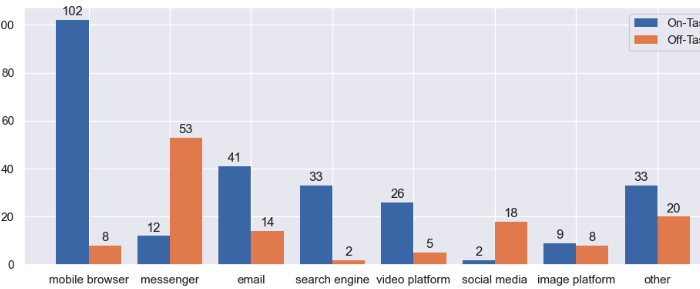
We are happy to announce the publication of our latest research paper that delves into the intricate relationship between digital media usage and the learning experience. The paper addresses key challenges related to monitoring on-task and off-task behavior and suggests innovative solutions for a more effective and ethical study of learners' media habits.Traditionally, researchers have faced a myriad of challenges in accurately gauging how students utilize digital media while learning. Self-reported data often suffer from issues like faulty memory, subjective perceptions, and bias. Understanding whether digital media use enhances or hinders the learning experience is an incredibly complex issue. We identified and addressed four core challenges in logging digital media use during learning: The logging system must only be active during the learning period to capture relevant data. Data collection…
Read More
New Pub: How well does teacher education prepare for teaching with technology?

New Pub: How well does teacher education prepare for teaching with technology?

Competence development, Digitalisation, Empirical Study, Higher Education, Journal, Open access, Publication
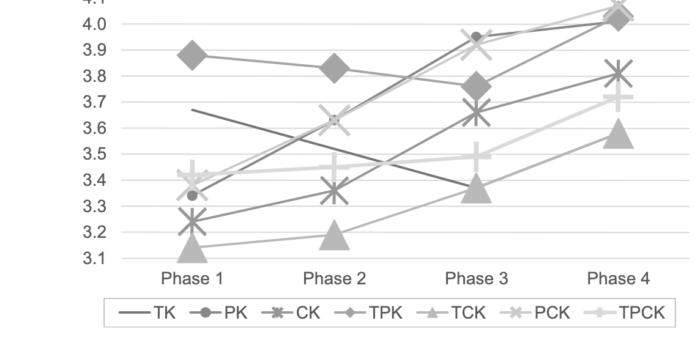
Despite large-scale investments into the technological infrastructure of K-12 education, research has repeatedly shown that many teachers lack the expertise to effectively incorporate technology into classroom teaching. To support teachers in this, there is a need to understand how and when the relevant knowledge develops during teacher training. To this end, Joshua Weidlich and Marco Kalz conducted a study at Heidelberg University of Education, sampling prospective teachers (N = 526) and analyzing their self-reported technological pedagogical content knowledge (TPACK) across the seven dimensions of the framework. Specifically, they assessed (1) the extent to which students more advanced in their studies reported higher TPACK, (2) the effect of gender on these trajectories, and (3) the potential role of curricular cornerstones of the teacher education program. Regarding (1), they found that not…
Read More
New pub: Fostering children’s acceptance of educational apps

New pub: Fostering children’s acceptance of educational apps

Journal, Learning Design, School, Self-Regulation
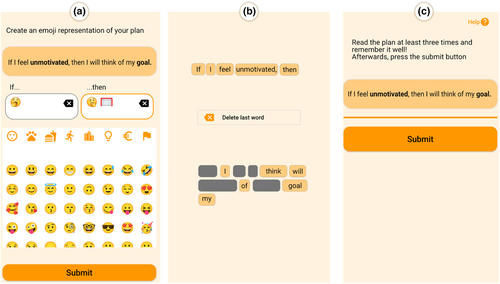
In the field of educational applications (apps), the focus has shifted from mere functionality to creating enjoyable and beneficial learning experiences for children. A recently published article sheds light on the influence of redesigning a mobile learning activity in an app to enhance its appeal and usefulness to young learners. By exploring the relationship between children's enjoyment, intention to use and the incorporation of emojis, this study provides valuable insights into optimizing educational apps. The study involved 103 children aged 9 to 14 years, who participated in a 27-day exploration of a mobile learning app. The objective was to determine how different learning activities influenced children's intention to use the app. The researchers revamped a traditional learning activity, replacing it with an emoji-based representation of learning plans. Two other standard…
Read More
Workshop @ JTELSS – “We can’t stop communicating – AI can help us to use this data for education”

Workshop @ JTELSS – “We can’t stop communicating – AI can help us to use this data for education”

Summer School, Workshop
At the 17th EATEL Summer School on Technology-Enhanced Learning (JTELSS 2023) in La Manga, Spain, Nina Mouhammad and Stefan Hummel conducted the workshop "We can't stop communicating - AI can help us to use this data for education." The workshop emphasized the importance of incorporating both verbal and nonverbal communication signals in technology-enhanced learning applications. Various examples highlighting successful implementations were discussed. The participants were divided into two groups to explore nonverbal and verbal communication, respectively. After engaging discussions, interactions and also prototype testing, the groups swapped to gain insights from both perspectives. To conclude the workshop on a creative note, participants formed small groups and designed either the worst presentation skills training app imaginable or a product box for a presentation skills training robot. This exercise sparked laughter while…
Read More
New pub: Measuring Collaboration Quality Through Audio Data and Learning Analytics

New pub: Measuring Collaboration Quality Through Audio Data and Learning Analytics

Book chapter, Computer-supported collaborative learning, Learning Analytics, Multimodal Learning Analytics
In the rapidly evolving twenty-first century, collaboration stands as a vital skill. Recognizing its significance, the detection of collaboration quality can play a pivotal role in fostering effective teamwork. This newly published chapter dives into the realm of collaboration quality detection and measurement, aiming to achieve the following objectives: Defining collaboration quality by leveraging audio data and unobtrusive learning analytics measures. Detailing the design of a sensor-based setup specifically tailored for automatic collaboration analytics. Advancing the quantification of collaboration quality through the utilization of this setup and presenting the analysis using insightful visualizations. Moreover, the chapter delves into the challenges and issues at hand while exploring potential solutions that build upon existing research. To elucidate the various objectives, the terminology of "indicators" (i.e., the events) and "indexes" (i.e., the process)…
Read More
New pub: Lernpfade in adaptiven und künstlich-intelligenten Lernprogramme

New pub: Lernpfade in adaptiven und künstlich-intelligenten Lernprogramme

Artificial Intelligence, Book chapter, Learning Analytics, Research Methods
In this newly published book chapter, the authors delve into the comparison between interactive, adaptive and artificially intelligent learning programs. While adaptive and AI-based applications offer promising potential, they face greater complexity in their development and have yet to fully establish themselves. To evaluate the prospects of these technologies, their respective capabilities are explored. Adaptive learning programs prove effective in skill acquisition, while AI-based solutions shine in cases where an explicit expertise model is challenging to articulate. The didactic and pedagogical challenges that lie ahead for AI-based learning applications are also highlight. By examining these factors, valuable insights are gained into the landscape of advanced learning technologies and their future implications. Reference: Kerres, M., Buntins, K., Buchner, J., Drachsler, H., & Zawacki-Richter, O.. (In Press). Lernpfade in adaptiven und künstlich-intelligenten…
Read More
New pub: Evaluating the Impact of FoLA on Learning Analytics Knowledge Creation

New pub: Evaluating the Impact of FoLA on Learning Analytics Knowledge Creation

Journal, Learning Analytics, Learning Design, Publication, Research Methods, Research topic, Special Issue
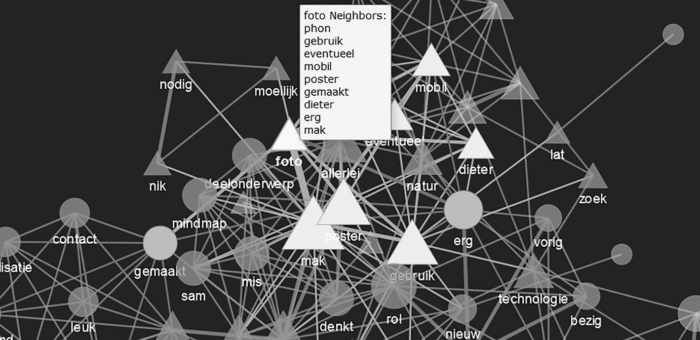
Learning analytics provides opportunities to improve the design of learning activities by supplying information on the effects of different learning approaches. Despite the existence of design methods that aim to facilitate the incorporation of learning analytics into learning design, there is a lack of research assessing their efficacy. This study aims to evaluate the effectiveness of the FoLA2 method. In higher education settings, sixty participants utilized the FoLA2 method to develop fourteen learning activities. To gauge the impact, participants completed a technology acceptance test before and after each session. Furthermore, researchers analyzed audio recordings of the sessions using epistemic network analysis to gain insights into the discussions regarding learning analytics and the creation of enhanced learning activities. The results from both the technology acceptance test and the epistemic network analysis…
Read More
New pub: Digitalisierung und Diagnostik in Schulen – Herausforderungen für Bildungspraxis und Bildungsforschung

New pub: Digitalisierung und Diagnostik in Schulen – Herausforderungen für Bildungspraxis und Bildungsforschung

Assessment, Book chapter, Computational Psychometrics, Digitalisation, Learning Analytics, Research Methods, Research topic, School
In the spring of 2020, schools faced an unprecedented challenge as the pandemic disrupted traditional modes of instruction and school development. With on-site learning replaced by digital formats and distance communication, educators had to quickly adapt to the new normal. Amidst these changes, the field of education encountered specific challenges related to digital school management, digital learning, and assessing learning progress. Particularly, computer-aided diagnostics emerged as a valuable tool for gaining insights not only into learning outcomes but also into the learning process itself. Researchers became intrigued by the potential of digital media in shaping learning experiences and how the resulting data could be effectively utilized in educational practice. This paper explores the current challenges and potentials in computer-based, learning-accompanying diagnostics. The primary hurdles involve implementing suitable instruments within schools…
Read More
New pub: Causal reasoning with causal graphs, published in ETRD

New pub: Causal reasoning with causal graphs, published in ETRD

Journal, Publication, Research Methods, Special Issue
Educational Technology, like many other empirical research fields, needs to provide evidence for the causal effectiveness of their interventions. This is as important for establishing the efficacy of some novel educational technology as it is for theory-building. However, because educational research, especially field research, can be messy, tightly-controlled randomized experiments are not always the best option. Importantly, as our development paper shows, this does not mean that researchers should abandon all claims of causality. Instead, we highlight the importance of explicit causal reasoning, while equipping researchers with a tool to approach this daunting task systematically. Causal graphs (or Directed Acyclic Graphs = DAGs) are a low-barrier approach to reasoning about causality in all research contexts. Using a few construction rules, the resultant graphs allow researchers to figure out whether a…
Read More
New research program: Towards Highly Informative Learning Analytics

New research program: Towards Highly Informative Learning Analytics

Artificial Intelligence, Assessment, Book, Computational Psychometrics, Computer-supported collaborative learning, Feedback, Further Education, Higher Education, Keynote, Learning Analytics, Learning Design, Research Methods, School
On May 12, 2023, the Highly Informative Learning Analytics (HILA) research program of the EduTec@DIPF, studiumdigitale@Goethe University Frankfurt and the Open Learning and Instruction group@Open Universiteit was presented by Hendrik Drachsler at the main campus of the Open University of the Netherlands. The release of the HILA research program marks a significant milestone for the collaboration in the field of learning analytics between of the Dutch-German research collective.  The HILA research program is focused on developing new tools and methods to collect, analyze, and interpret data that can help educational institutions to understand the learning process better. As part of the program's launch, a keynote by Ioana Jivet on student-facing learning analytics was provided. Ioana reported on two empirical studies investigating the effect of data-driven feedback on students. [pdf-embedder url="https://edutec.science/wp-content/uploads/2023/05/2023_05-Keynote-Symposium-Hendrik.pdf"…
Read More