Keynote: 5 years of Highly Informative Learning Analytics

Keynote: 5 years of Highly Informative Learning Analytics

Artificial Intelligence, Conference, Feedback, Higher Education, Keynote, Learning Analytics, Learning Design, Research Methods, School
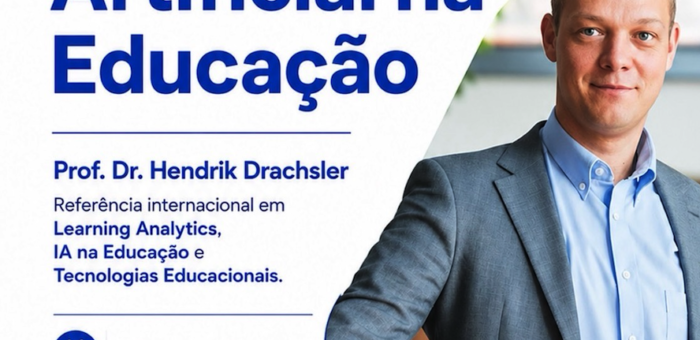
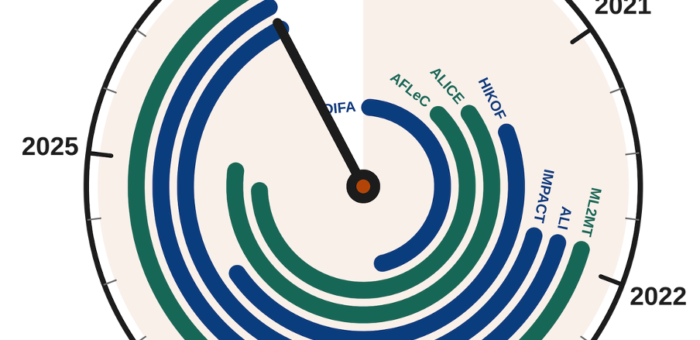
Five years in forty minutes On 7 October 2026, Hendrik Drachsler gave a keynote at the CBIE 2026 conference in Goiana, Brazil, that tried something unusual: time travel. He compressed five years of field research, seven projects and roughly 5,750 students into one forty-minute talk. The question behind the keynote was simple: after five years of developing and testing Highly Informative Learning Analytics (HILA) in real lecture halls, what do we actually know? Not what we hoped HILA might achieve back in 2020, but what five years of our own research and data now tell us. What HILA set out to do HILA starts with a modest observation: most lecture rooms still offer very little personalisation. Learning analytics promised to change that, but its rollout in Europe stalled on four…
Read More
PhD defense: Congratulations, Dr. Manuel Valle Torre!

PhD defense: Congratulations, Dr. Manuel Valle Torre!

Artificial Intelligence, Higher Education, Learning Analytics, PhD defense, School
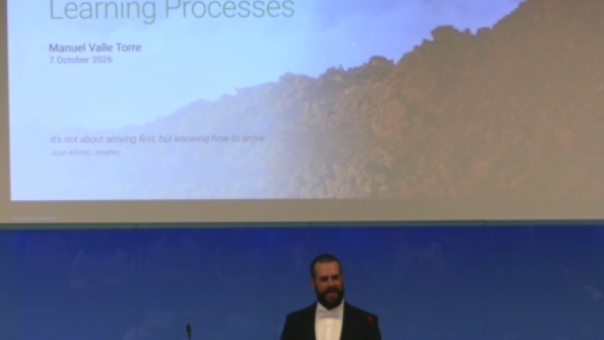
Today, 07.10.2026 at 15:00, Manuel Valle Torre successfully defended his PhD thesis "Sequences in Data to Represent Learning Processes: What have you tried until now?" at Delft University of Technology. Hendrik Drachsler was honoured to take part as an independent member of the doctoral committee. [pdf-embedder url="https://edutec.science/wp-content/uploads/2026/10/Manuel-defense-slides.pdf"] Manuel's thesis starts with a question every programming tutor knows: "What have you tried until now?" Digital learning environments usually assess only the final product, so this question is hard for them to answer. In three phases, Manuel shows how sequences of learner actions can be used to understand learning processes and support them while they happen. He developed ELAT for analysing edX log data, reviewed the field of learning sequence analysis, and studied problem-solving in data science notebooks. He then built JELAI,…
Read More
mISPL: Mini Framework for Intelligent Systems for Psychomotor Learning @ ECTEL 26

mISPL: Mini Framework for Intelligent Systems for Psychomotor Learning @ ECTEL 26

Conference, Workshop
I recently had the pleasure of presenting my latest work at the MILeS 2026 workshop (Fourth International Workshop on Multimodal Immersive Learning Systems), held during the ECTEL 2026 conference in Valencia, Spain. It was an incredible week of pushing the boundaries of technology-enhanced learning, exchanging ideas, and building lasting professional bonds. Here is a quick recap of my experience, from early-stage frameworks to visionary futures and unforgettable social gatherings. Part 1: Introducing mISPL In the first part of the workshop, I presented my paper: "mISPL: Mini Framework for Intelligent Systems for Psychomotor Learning". While comprehensive frameworks like PsyLearn exist for building full-fledged psychomotor tutoring systems, they can often feel overwhelming for researchers in the early stages of development. That is where mISPL comes in. It is a streamlined, accessible "mini"…
Read More
Dr. Fabíola Gonçalves Joins the EduTec Group as Research Fellow

Dr. Fabíola Gonçalves Joins the EduTec Group as Research Fellow

Team
We warmly welcome Dr. Fabíola Gonçalves as a new member of our EduTec team at DIPF. Dr. Fabíola is a postdoctoral researcher and has recently been awarded a CAPES-Humboldt Research Fellowship. Her project “AI-Supported Co-Design for Personalized Feedback and Teaching Enhancement” will be supervised by Prof. Hendrik Drachsler and focuses on the analysis, investigation and integration of AI support to enhance teaching and learning practices.  Dr. Fabíola completed her PhD in Computer Science at the University of Oldenburg, Germany, in cooperation with the Federal University of Uberlândia, Brazil. From 2013 to 2025, she worked as a professor and researcher at the Federal Institute Goiano, Brazil, contributing to teaching, student supervision and scientific projects in secondary and higher education contexts.  Dr. Fabíola’s areas of expertise include Software Engineering, System Specification and Design, Project Management and Human-Computer Interaction. Currently, her research focus includes human-centered approaches, particularly in Artificial Intelligence in Education (AIED), Learning Analytics and the use of Large Language…
Read More
New Pub: Implementation of AI-based Feedback and Assessment – IMPACT Project Evaluation Report

New Pub: Implementation of AI-based Feedback and Assessment – IMPACT Project Evaluation Report

Artificial Intelligence, Feedback, Higher Education, Learning Analytics, Publication, Report
How can universities provide individual feedback and useful support systems to every student when class sizes continue to grow and learner needs become increasingly diverse? Artificial intelligence offers promising opportunities to provide personalized learning and teaching support on a larger scale. Yet as regulations regarding data protection, transparency and the responsible use of AI continue to evolve, institutions face a difficult balancing act between innovation and regulatory compliance. These issues were addressed in the IMPACT project (Implementation of AI-based Feedback and Assessment with Trusted Learning Analytics in Higher Education Institutions), which explored how AI can support students and educators throughout the academic journey. Its goal was to develop AI-based methods for the semi-automated analysis of academic texts, to allow for more effective support in learning, teaching and assessment. A key…
Read More
Invited Talk at the NEES Center, Maceió, Brasil

Invited Talk at the NEES Center, Maceió, Brasil

Higher Education, Invited talk, Keynote, Keynote, Learning Analytics, Learning Design
In August, Hendrik Drachsler was invited to give a talk at the NEES research centre of the Federal University of Alagoas (UFAL) in Maceió, hosted by Prof. Dr Diego Dermeval. The lecture, "Design, Development and Evaluation of Highly Informative Learning Analytics", was organised together with the PPGI graduate programme and drew a full house of 80 participants. Hendrik's argument was straightforward. Most learning analytics is not wrong; it is just not informative enough. Counting clicks and minutes tells a teacher that something happened, not what to do about it. Moving from descriptive to truly informative analytics takes three things: indicators grounded in learning theory, a design process that includes the educators who will use the results, and a governance framework that makes the whole thing defensible. He presented the tools…
Read More
[New Pub] Estimating LLM Grading Ability and Response Difficulty in Automatic Short Answer Grading via Item Response Theory

[New Pub] Estimating LLM Grading Ability and Response Difficulty in Automatic Short Answer Grading via Item Response Theory

Artificial Intelligence, New Pub, School
On July 4, 2026, Longwei Cong virtually presented the paper “Estimating LLM Grading Ability and Response Difficulty in Automatic Short Answer Grading via Item Response Theory” at the ACL SIGEDU 21st Workshop on Innovative Use of NLP for Building Educational Applications (BEA 2026). The work investigates automatic short answer grading with large language models from a psychometric perspective. Instead of relying only on aggregate evaluation metrics such as accuracy or macro-F1, the study applies Item Response Theory to jointly estimate the grading ability of individual LLMs and the difficulty of student responses. The results show that LLM graders differ not only in their overall performance, but also in their robustness when evaluating more difficult responses. In addition, highly difficult responses were found to induce systematic grading errors, including a tendency…
Read More
[New Pub] Confidence Estimation in Automatic Short Answer Grading with LLMs

[New Pub] Confidence Estimation in Automatic Short Answer Grading with LLMs

Artificial Intelligence, New Pub, School
On June 30, Longwei Cong presented the work “Confidence Estimation in Automatic Short Answer Grading with LLMs” at the 27th International Conference on Artificial Intelligence in Education (AIED 2026) in Seoul. The work investigates how confidence estimates can make automatic short-answer grading with large language models more reliable in practice. In addition to commonly used model-based confidence signals, it also considers uncertainty originating from the data itself. In particular, aleatoric uncertainty is estimated from the semantic heterogeneity of student responses and combined with several model-side confidence signals. The study evaluates these uncertainty estimates with a focus on practical use: whether they can support selective grading and help identify responses for which automated grading is less reliable and human review would be preferable. The paper is available via the following link:…
Read More
New Pub: The Dependency Dilemma of Machine Learning Aids

New Pub: The Dependency Dilemma of Machine Learning Aids

Artificial Intelligence, Journal, New Pub
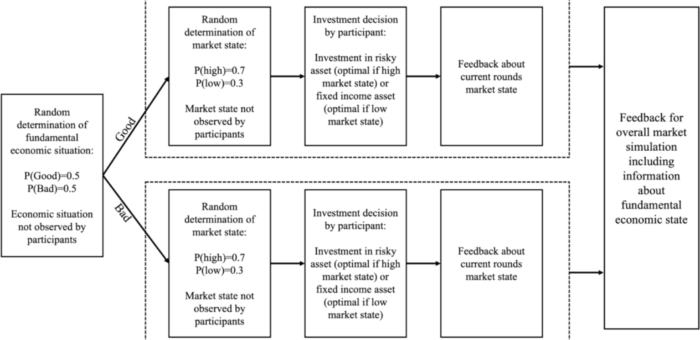
AI and machine-learning decision aids can be a great support for employees and help them improve their work performance. An overreliance on algorithmic recommendations, on the other hand, may result in a long-term reduction of the employees’ ability to develop and maintain their own decision-making skills. This could be especially problematic when such AI and machine-learning decision aids are not available. Instead of overly relying on such AI-based recommendations, organizations should train their employees to continue developing their critical thinking and decision-making skills. Hendrik Drachsler and his research partners address this problematic dependency on AI tools and the conflict of interests in the workplace in their newly published article “The Dependency Dilemma: How Machine Learning Decision Aids can Undermine Skill Growth”. Using a controlled experiment, the authors found that participants…
Read More
New Pub: Recommendations for Higher Education in the Age of Generative AI

New Pub: Recommendations for Higher Education in the Age of Generative AI

Artificial Intelligence, Higher Education, Publication, Report
Generative AI cannot be treated as just another digital tool that has come along. As it becomes more and more embedded in higher education, universities face the challenge of responsibly navigating the many challenges and opportunities that generative AI brings with it. One central guiding principal for institutions and stakeholders engaged with generative AI is intellectual sovereignty, which the German Science and Humanities Council (Wissenschaftsrat, WR) highlights in its newly published position paper, which was presented in a digital press release on 06.07.2026. Intellectual sovereignty refers to the ability to think independently, exercise critical judgment and maintain autonomy in the creation and evaluation of knowledge. Rather than relying uncritically on AI-generated outputs, this concept encourages students, educators and institutions to actively question, assess and contextualize information. By placing intellectual sovereignty…
Read More