New Pub: The Dependency Dilemma of Machine Learning Aids

New Pub: The Dependency Dilemma of Machine Learning Aids

Artificial Intelligence, Journal, New Pub
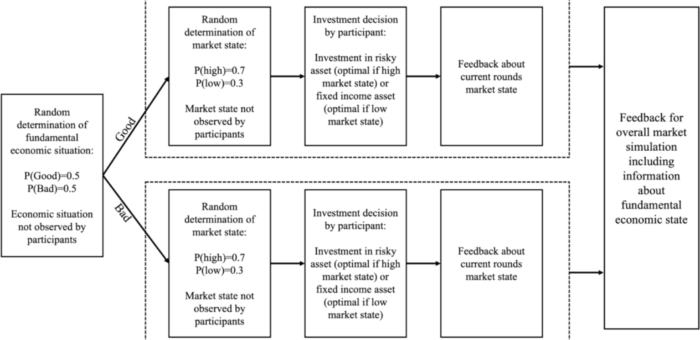
AI and machine-learning decision aids can be a great support for employees and help them improve their work performance. An overreliance on algorithmic recommendations, on the other hand, may result in a long-term reduction of the employees’ ability to develop and maintain their own decision-making skills. This could be especially problematic when such AI and machine-learning decision aids are not available. Instead of overly relying on such AI-based recommendations, organizations should train their employees to continue developing their critical thinking and decision-making skills. Hendrik Drachsler and his research partners address this problematic dependency on AI tools and the conflict of interests in the workplace in their newly published article “The Dependency Dilemma: How Machine Learning Decision Aids can Undermine Skill Growth”. Using a controlled experiment, the authors found that participants…
Read More
New Pub: Recommendations for Higher Education in the Age of Generative AI

New Pub: Recommendations for Higher Education in the Age of Generative AI

Artificial Intelligence, Higher Education, Publication, Report
Generative AI cannot be treated as just another digital tool that has come along. As it becomes more and more embedded in higher education, universities face the challenge of responsibly navigating the many challenges and opportunities that generative AI brings with it. One central guiding principal for institutions and stakeholders engaged with generative AI is intellectual sovereignty, which the German Science and Humanities Council (Wissenschaftsrat, WR) highlights in its newly published position paper, which was presented in a digital press release on 06.07.2026. Intellectual sovereignty refers to the ability to think independently, exercise critical judgment and maintain autonomy in the creation and evaluation of knowledge. Rather than relying uncritically on AI-generated outputs, this concept encourages students, educators and institutions to actively question, assess and contextualize information. By placing intellectual sovereignty…
Read More
New Pub: Competent Usage of AI and Digital Technology in Education

New Pub: Competent Usage of AI and Digital Technology in Education

Artificial Intelligence, New Pub, Publication
[caption id="attachment_8403" align="alignright" width="300"] Modified TPACK model as Level 2 of the AIEDTEC-CDM. Note. TPK = technological pedagogical knowledge (TPK), TCK = technological content knowledge, PCK = pedagogical content knowledge, TPCK = technological pedagogical content knowledge.[/caption] How can teachers and learners use AI and digital technology competently, critically and safely in education? Simply using AI tools and digital technology in educational settings does not necessarily mean that learners will profit from these tools. Some tools may have a positive effect on learning, while others may not. A newly published paper addresses this issue and formulates a theoretical framework for the “Competence to Use Artificial Intelligence and Digital Technology in Educational Processes” (AIEDTEC competence). Combining insights from psychology and computer science, it aims to provide a theoretical definition of the competent…
Read More
Exploring the Future of Digital Teaching at #EduNext25

Exploring the Future of Digital Teaching at #EduNext25

Artificial Intelligence, Conference, Event, Higher Education
On 26.11.2025 our team had the privilege of participating in #EduNext25, a full-day conference dedicated to the future of digitalization and AI in higher education. Hosted by studiumdigitale at Goethe University Frankfurt, the event brought together educators, researchers and innovators from across Hessen and beyond to discuss how technology can transform teaching and learning. The opening remarks by Prof. Dr. Viera Pirker, Minister TimonGremmels and Prof. Dr. Hendrik Drachsler set the tone: digitalization and AI are not just trends, they are essential tools for shaping the academic experience of tomorrow. One highlight was the EduConnect session, where universities from the HessenHub network and the QuiS program showcased their latest projects and approaches to digital learning. Another highlight was the panel discussion on strategic alliances for future teaching. Experts from various…
Read More
Teacher-Student-AI Co-Orchestration in Educational Settings

Teacher-Student-AI Co-Orchestration in Educational Settings

Workshop
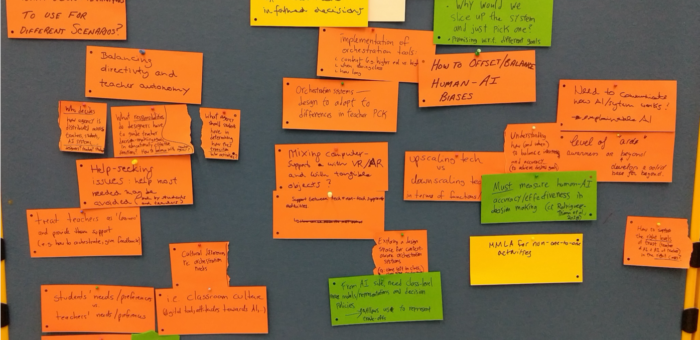
On the 4th and 5th of March 2020 in Bochum the international workshop on Teacher-Student-AI co-orchestration in education took place. Participants in the workshop include Vincent Aleven, Ken Holstein and Bruce McLaren from Carnegie Mellon University, Manolis Mavrikis and Mutlu Cukurova from University College London, Anouschka van Leeuwen from Universiteit Utrecht, Jenny Olsen from École Polytechnique Féderale de Lausanne (EPFL), Inge Molenaar from Radboud Universiteit, Nikol Rimmel from Ruhr-Universität Bochum, Knut Neumann from the Leibniz Institut für die Pädagogik der Naturwissenschaften und der Mathematik, and Jan Schneider from the DIPF. AI and Education Workshop Programm During the workshop, researchers presented their research with the purpose to identify common challenges and propose ideas and research directions to solve them. Most of the institutes are working on different learning scenarios and therefore trying…
Read More