How to Implement and Scale Learning Analytics Infrastructures in the Cloud @ #JTELSS24

How to Implement and Scale Learning Analytics Infrastructures in the Cloud @ #JTELSS24

Critical Online Reasoning, Higher Education, Learning Analytics, Summer School, Workshop
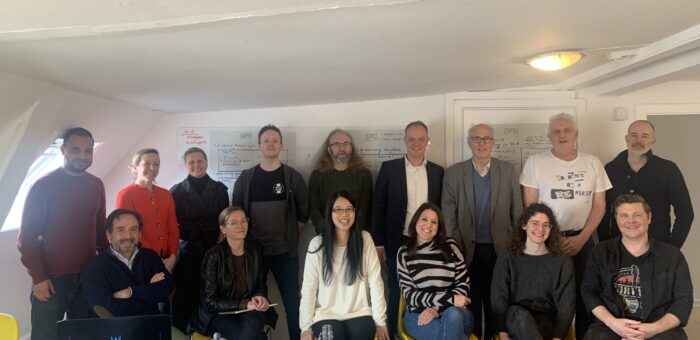
At the 18th EATEL Summer School on Technology-Enhanced Learning (JTELSS 2024) in Gabicce Mare, Pesaro, Italy, Gianluca Romano and Sebastian Gombert conducted the workshop "From Learner Behavior to Big Data: How to Implement and Scale Learning Analytics Infrastructures in the Cloud”. In the ever-evolving world of cloud computing, Azure stands out as a robust platform offering a myriad of services and tools to help businesses innovate and scale. Recently, we had the chance to delve deep into Azure's ecosystem, exploring its billing structures, infrastructure capabilities, and budgeting models. Here's a glimpse into what we learned and how you can leverage Azure for tracking user behavior and managing costs effectively. One of the foundational aspects of working with Azure is understanding its billing structure, which is organized into tenants, subscriptions, and…
Read More
GREAT project presentation at the Int. Conf. of Young Scientists 2024

GREAT project presentation at the Int. Conf. of Young Scientists 2024

Conference
From 7-10 May 2024, Jane Yau was at the International Conference of Young Scientists, held in conjunction with the Global Young Academy Annual Conference. This year's theme was "Transformative and inclusive science for a sustainable future" and was held at the National Academy of Sciences, Engineering and Medicine in Washington D. C. Jane presented the GREAT project, which was recorded and live-streamed (the recording will be available shortly). Positive and enthusiastic feedback was received relating to how the project can align with the United Nations Climate Promise Plan to reduce global carbon emissions by 1.5 degrees by 2025. The project is currently undertaking a number of case studies and by the end of the year, there will be lots of detailed results relating to how games can be used effectively…
Read More
Dr. Diana Gayol Visits the EduTec Team

Dr. Diana Gayol Visits the EduTec Team

Artificial Intelligence, Higher Education, Transfer Activity
Last week we had the pleasure of welcoming Dr. Diana Gayol, Director of Diploma in Didactics and Pedagogy in Health Areas at the Faculty of Medicine of the Fundación Barceló in Buenos Aires (Argentina), to DIPF. Dr. Gayol's research focuses on psychological studies of Argentinean students and shows parallels with various activities of the TBA Center. On her research trip, she was able to make a stop at Campus Westend, where she was particularly interested in an exchange about future AI applications in argentinian education with Sebastian Wollny and Sebastian Gombert. Collaborative Discussions During her visit, Dr. Gayol engaged in dynamic discussions with our researchers. We explored topics ranging from personalized learning through Intelligent Tutoring Systems (ITS) to Chatbots and AI-driven analytics. Dr. Gayol emphasized the importance of bridging the…
Read More
Recap of the MODUS conference in Karlsruhe

Recap of the MODUS conference in Karlsruhe

Artificial Intelligence, Conference, Higher Education
As the echoes of insightful discussions and the energy of networking gradually settle, it's time to revisit the highlights of the German Rectors’ MODUS Conference which took place an April 10th and 11th 2024 in Karlsruhe. The conference titled “Recognition Culture in Higher Education. International Perspectives on Lifelong Learning and Student Mobility” brought together around 200 experts and interested parties from universities and research institutions, including Hendrik Drachsler and other representatives from the Goethe University. The conference produced a wealth of insights into the integration of artificial intelligence (AI) at universities. Discussions highlighted both opportunities and challenges, especially in the context of the digitalization of administration and teaching organizations. Instruments for various areas of application were presented, including information and communication tools such as chatbots and recommendation systems, as well…
Read More
New Pub: Students Want to Experiment While Teachers Care More About Assessment! Exploring How Novices and Experts Engage in Course Design

New Pub: Students Want to Experiment While Teachers Care More About Assessment! Exploring How Novices and Experts Engage in Course Design

Computer-supported collaborative learning, Conference, Conference, Higher Education, Learning Analytics, Learning Design, New Pub, Open access, Open science, Publication, Technical paper
Abstract: Learning Design (LD) is the strategic orchestration of educational components to create a rewarding experience for students and educators. Adapting it to real-world scenarios with evolving technologies, like learning analytics (LA), adds complexity but offers the potential for enhanced learning outcomes and engagement. Prior research highlights the growing importance of LA in informing LD decisions. The FoLA2 method offers a collaborative approach to course design considering LA implications. This study pursues two primary objectives. Firstly, to enhance the FoLA2 method by granting course designers access to the Open Learning Analytics Indicator Repository (OpenLAIR) that facilitates visual connections between LD pedagogies, LDLA activities, LA indicators and their metrics. Secondly, to explore how novice and expert groups utilize the FoLA2 methodology to design a course in Technology Enhanced Learning. The findings…
Read More
Atezaz’s Conference Paper Presentation at CSEDU in Angers, France

Atezaz’s Conference Paper Presentation at CSEDU in Angers, France

Conference, Conference, Event, Learning Analytics, Learning Design, Publication
Atezaz shared insights from their paper titled "Students Want to Experiment While Teachers Care More About Assessment! Exploring How Novices and Experts Engage in Course Design" at the CSEDU 2024 conference in Angers, France, delving into its implications and findings. Additionally, this paper received a nomination in the Best Student Paper category.
Read More
GREAT project presentation at World Forum Women in Science – Theme “Science for the SDGs”

GREAT project presentation at World Forum Women in Science – Theme “Science for the SDGs”

Event, Invited talk
On 15 April, GREAT project manager Dr. Jane Yau had the pleasure of moderating the session Technology, Sustainability and Industry with Prof. Nova Ahmed at the World Forum Women in Science - Theme: Science for the SDGs (https://women-in-science-without-borders.network/world-forum-women-in-science-2024/).  The session included a number of initiatives of empowering women and underrepresented groups to take on science activities and careers to advance the SDGs. Jane also shared the GREAT project findings in this session with a talk “Gaming for Change: Leveraging digital games to address climate change”, based on the GREAT project methodology and first case study findings!  The session was free to attend and was live-streamed on Facebook. The video recording will be available shortly.Jane will also be in Rome, Italy, on 19 April to attend the in-person Networking Event as…
Read More
Team led by Sebastian Gombert wins one of two tracks at BEA 2024 shared task on predicting Item Difficulty and Item Response Time

Team led by Sebastian Gombert wins one of two tracks at BEA 2024 shared task on predicting Item Difficulty and Item Response Time

Artificial Intelligence, Assessment, Award, Computational Psychometrics, Conference, Higher Education, New Pub, Workshop
For standardized exams to be fair and reliable, they must include a diverse range of question difficulties to accurately assess test taker abilities. Additionally, it's crucial to balance the time allotted per question to avoid making the test unnecessarily rushed or sluggish. The goal of this year's BEA shared task (competition) was to build systems which could predict Item Difficulty and Item Response Time for items taken from the United States Medical Licensing Examination (USMLE). EduTec member Sebastian Gombert designed systems which are able to predict both variables simultaneously. These placed first out of 43 for predicting Item Difficulty and fitfth out of 34 for predicting Item Response Time. They use modified versions of established transformer language models in a multitask setup. A corresponding system description paper titled Predicting Item…
Read More
CORE Roundtable in Munich

CORE Roundtable in Munich

Assessment, Critical Online Reasoning, Multimodal Learning Analytics, Project, Project meeting
Hendrik Drachsler, Sebastian Gombert and Gianluca Romano participated at the Roundtable in Munich for the CORE project (Critical Online Reasoning in Higher Education) from 04.03.-05.03.2024. In those two days, our team had the chance to recapitulate on how the infrastructure stood strong during the first survey from December 2023 to February 2024, and pave the way for next steps and surveys. In summary, the infrastructure performed well. It dealt with approximately 10Mio. requests per seconds and the majority of hurdles participants reported were out of our authority. Requests from participants were dealt with quickly in a few days on average. Even though we are proud of our achievements there is still a lot to be done for future surveys. For the agenda we split into smaller groups, each of us…
Read More
Didacta Presentation in Cologne: Key Questions to Find Fitting AI Solutions For Student Feedback

Didacta Presentation in Cologne: Key Questions to Find Fitting AI Solutions For Student Feedback

Artificial Intelligence, Feedback, General education, Invited talk, School
What are the goals of AI in education for student feedback? How can teachers make sure that their AI-assisted feedback goes beyond simple right/wrong statements and instead provides not only correct solutions, but also possibilities for improvement, hints on competence development and effective learning strategies? To find a fitting AI solution, there are key questions one should know to ask in advance. These questions were outlined by Hendrik Drachsler in his presentation at the didacta 2024 in Cologne on 20.02.2024 titled “Ihr KI-Anbieter-Test - 3 Schlüsselfragen die Sie kennen sollten.” The key questions: Question 1: What indicators does your AI product use to analyze learning outcomes? --> Look for AI products that provide relevant indicators for measuring learning progress and skills acquisition. These indicators are important to accurately assess learning…
Read More