New Pub: The Dependency Dilemma of Machine Learning Aids

New Pub: The Dependency Dilemma of Machine Learning Aids

Artificial Intelligence, Journal, New Pub
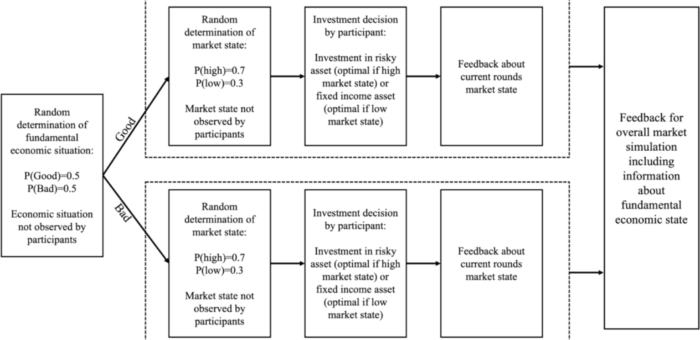
AI and machine-learning decision aids can be a great support for employees and help them improve their work performance. An overreliance on algorithmic recommendations, on the other hand, may result in a long-term reduction of the employees’ ability to develop and maintain their own decision-making skills. This could be especially problematic when such AI and machine-learning decision aids are not available. Instead of overly relying on such AI-based recommendations, organizations should train their employees to continue developing their critical thinking and decision-making skills. Hendrik Drachsler and his research partners address this problematic dependency on AI tools and the conflict of interests in the workplace in their newly published article “The Dependency Dilemma: How Machine Learning Decision Aids can Undermine Skill Growth”. Using a controlled experiment, the authors found that participants…
Read More
New Pub: Recommendations for Higher Education in the Age of Generative AI

New Pub: Recommendations for Higher Education in the Age of Generative AI

Artificial Intelligence, Higher Education, Publication, Report
Generative AI cannot be treated as just another digital tool that has come along. As it becomes more and more embedded in higher education, universities face the challenge of responsibly navigating the many challenges and opportunities that generative AI brings with it. One central guiding principal for institutions and stakeholders engaged with generative AI is intellectual sovereignty, which the German Science and Humanities Council (Wissenschaftsrat, WR) highlights in its newly published position paper, which was presented in a digital press release on 06.07.2026. Intellectual sovereignty refers to the ability to think independently, exercise critical judgment and maintain autonomy in the creation and evaluation of knowledge. Rather than relying uncritically on AI-generated outputs, this concept encourages students, educators and institutions to actively question, assess and contextualize information. By placing intellectual sovereignty…
Read More
New Pub: Competent Usage of AI and Digital Technology in Education

New Pub: Competent Usage of AI and Digital Technology in Education

Artificial Intelligence, New Pub, Publication
[caption id="attachment_8403" align="alignright" width="300"] Modified TPACK model as Level 2 of the AIEDTEC-CDM. Note. TPK = technological pedagogical knowledge (TPK), TCK = technological content knowledge, PCK = pedagogical content knowledge, TPCK = technological pedagogical content knowledge.[/caption] How can teachers and learners use AI and digital technology competently, critically and safely in education? Simply using AI tools and digital technology in educational settings does not necessarily mean that learners will profit from these tools. Some tools may have a positive effect on learning, while others may not. A newly published paper addresses this issue and formulates a theoretical framework for the “Competence to Use Artificial Intelligence and Digital Technology in Educational Processes” (AIEDTEC competence). Combining insights from psychology and computer science, it aims to provide a theoretical definition of the competent…
Read More
Girls and Women in STEM Forum of the European Institute for Innovation and Technology (EIT)

Girls and Women in STEM Forum of the European Institute for Innovation and Technology (EIT)

Artificial Intelligence, Award, Conference, Digitalisation, Event, Transfer Activity
Our Co-Worker Dana Kube was selected to be a jury member of this year's Girls and Women in STEM Award of the European Institute for Innovation and Technology (EIT) in Budapest. Read her report: I'm still buzzing with the energy from the Women and Girls in STEM Forum 2024! It was an inspiring day filled with conversations on AI, inclusion, and the future of STEM with girls and women from all over Europe. The keynote speakers, Pia Ahrenkilde Hansen and Ilaria Tagliavini, emphasised the urgent need for more women to lead the next generation of scientists in Europe, highlighting the European Commission’s commitment to this mission through strategic plans for STEM education. Ilaria celebrated Girls Go Circular’s expansion to 32 countries, recognising the need for a mindset shift towards greater…
Read More
Invited talk at the University of The Philippines

Invited talk at the University of The Philippines

Invited talk
On June 19th, Daniele Di Mitri was invited to give an online talk at the University of the Philippines. The title of my talk was "Intelligent Tutors, Learning Analytics, and Multimodal Technologies," it served as the kickoff guest lecture for the webinar series hosted by the Intelligent Systems Center of the University of the Philippines. At its peak, the lecture had over 170 participants connected online. During the talk, he discussed how learners in the twenty-first century need continuous instruction and timely feedback to develop their competencies. In situations where human experts are not readily available, Artificial Intelligence (AI) systems can offer automatic, personalized, and real-time feedback to learners in distance learning settings. This allows learners to practice at their own pace while receiving continuous feedback. Moreover, AI feedback can…
Read More